

New research highlighted in the World Meteorological Organization (WMO) Bulletin shows that targeted improvements to ocean observing networks could significantly improve estimates of how much carbon dioxide the ocean absorbs. The findings reinforce the importance of developing new autonomous observing technologies, a key objective of the GEORGE project.
The ocean absorbs around a third of the carbon dioxide (CO₂) released by human activities, playing a vital role in regulating the Earth’s climate. However, large areas of the ocean remain poorly observed, making it difficult for scientists to accurately estimate the global ocean carbon sink.
A new article from a large group of international scientists, including partners from the GEORGE consortium and published in the WMO Bulletin Vol. 75 (2): The Warming Ocean, highlights new research showing that relatively modest improvements to existing observing networks could make a substantial difference.
Currently, in situ surface ocean CO₂ observations cover only 2.3% of monthly ocean grid cells measuring 1° latitude by 1° longitude. Observations are particularly limited in the Southern Ocean, especially during winter.
Using modelling experiments, researchers found that strategically expanding measurements from ships and autonomous surface vehicles in poorly observed regions and seasons could reduce the bias in reconstructed global ocean carbon sink estimates by 33%.
The findings, currently in preparation for a peer-reviewed publication by Thea Heimdal at Columbia University, demonstrate that improving ocean carbon observations is not only about collecting more data, but also about collecting measurements where and when they are most needed.
How GEORGE contributes to better ocean carbon observations
GEORGE is developing next-generation technologies for systematic, long-term autonomous ocean observations. The project is developing and integrating novel sensors and samplers into autonomous observing platforms, including Argo floats, deep-sea landers, gliders and uncrewed surface vehicles (USVs). These technologies aim to improve the spatial and temporal coverage of ocean carbon observations and enable measurements in remote and poorly sampled regions.
“Autonomous technologies play a particularly important role in polar regions and the Southern Ocean, where harsh conditions and limited access make it difficult to collect regular measurements. By developing sensors that can operate on autonomous platforms for extended periods, we can help fill critical gaps in ocean carbon observations and build a more complete picture of how the ocean absorbs and stores CO₂,” explains Lucie Knor, researcher at GEOMAR who led the WMO Bulletin article.
Using existing ocean observing databases and vessel information, Knor and her colleagues identified several potential sources of additional measurements: previously active ships that had stopped contributing CO₂ data, research and commercial vessels operating in the Southern Ocean, and voluntary observing ships already collecting other oceanographic measurements.
The researchers compared three network configurations: the existing observing network available via SOCAT, an expanded network incorporating additional ship-based observations, and an expanded network that also included the autonomous vehicles. Six reconstruction approaches were used to evaluate the expanded ship-based network, while four were used for the scenario including autonomous vehicles.
While the WMO article focuses specifically on surface ocean CO₂ measurements, GEORGE addresses a broader range of ocean carbon observations, including measurements from the surface to the seafloor. These new technologies have been tested in two major demonstration missions, first at the Porcupine Abyssal Plain Sustained Observatory (PAP-SO) in 2025, and second in the northwestern Mediterranean in 2026. The GEORGE team is currently performing quality control and analysis on the field data, which will become publicly available towards the end of the project.
Towards more comprehensive ocean carbon observations
The findings of the international group of ocean carbon scientists underline the importance of combining sustained observations with targeted improvements to existing observing networks. Autonomous platforms can play an important role by extending measurements to regions and seasons that are difficult to reach using conventional observing methods. This work is being progressed also in other projects, such as TRICUSO and COCO2 projects.
Read the article “Small Changes Could Mean Big Gains for Ocean Carbon Sink Estimates” in the WMO Bulletin here.
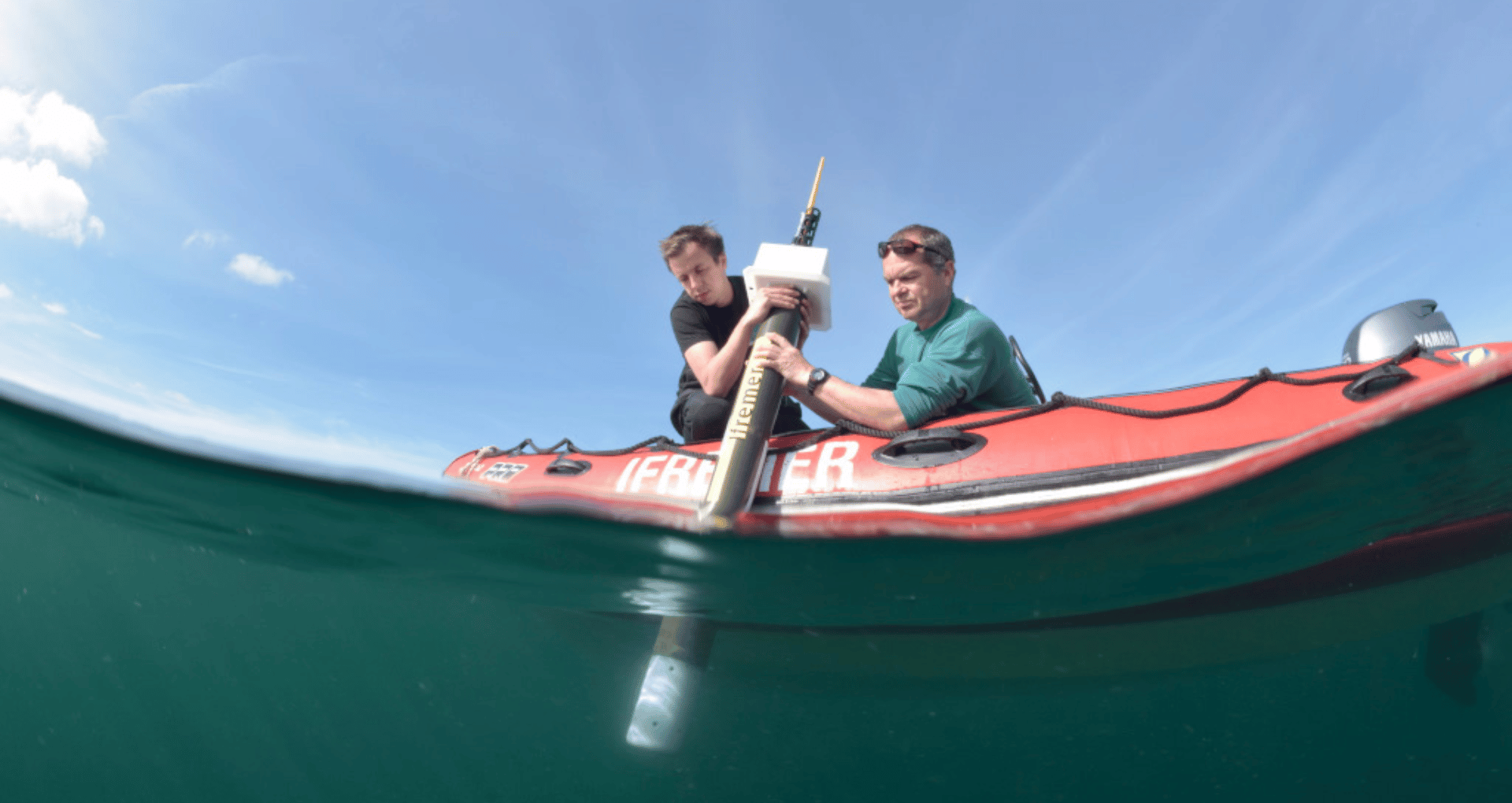
Photograph of an Argo float deployment © Olivier Dugornay & Ifremer