

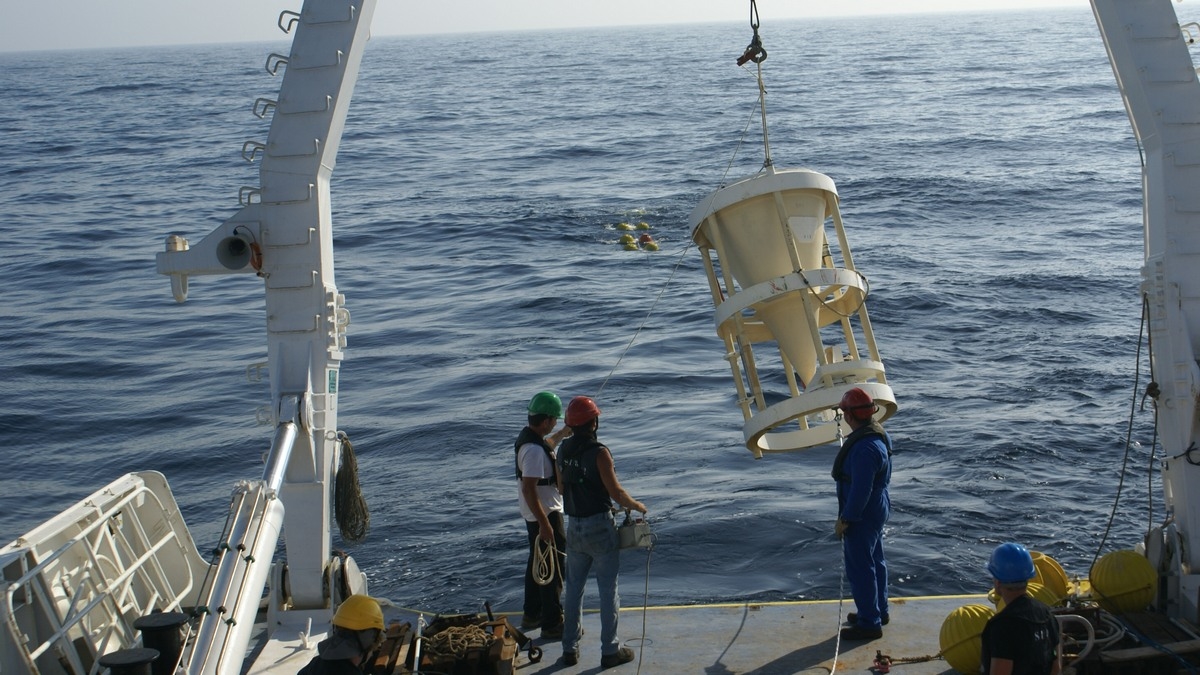
The GEORGE project is launching major multi-platform demonstration mission in the Northwestern Mediterranean Sea to test autonomous ocean observing technologies developed in the project. Coordinated by CNR and Sorbonne University, the two-week demo mission will test how different ocean observing platforms can work together to improve measurements of the ocean carbon system.
The central ship-based element of the demonstration is the research vessel Gaia Blu operated by National Research Council of Italy (CNR). The cruise sets sail on 7 July 2026 and continues until mid-July. During this period, teams onboard will support platform deployments, carry out ship-based measurements and help compare observations collected by several autonomous systems operating in the same wider region.
The mission’s main scientific goal is to characterise the ocean carbonate system using autonomous technologies. The demonstration area centres on the Marseille-Minorca section, the Gulf of Lion shelf and established Northwestern Mediterranean observing sites such as DYFAMED and LION. Access to these long-term observing sites makes this a great location for testing and validating new observing technologies.
Supporting observations in the Mediterranean Sea
Europe is the fastest-warming continent, warming more than twice as fast as the global average. By by early July 2026, large parts of the Western and Southern Europe have already seen record-breaking heatwaves. The continued impacts of climate change need to be studied closely in the regions most vulnerable to them.
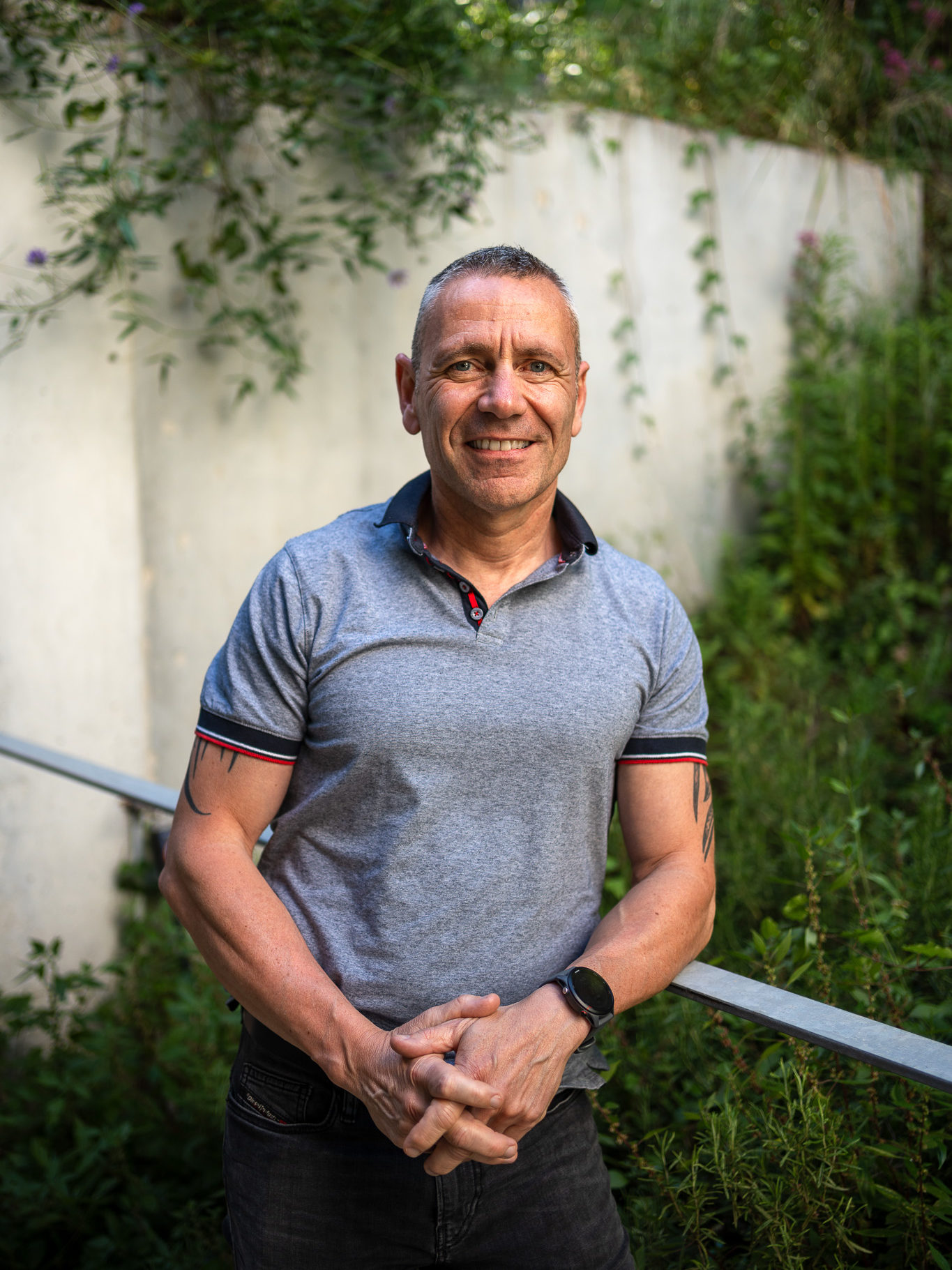
“The Mediterranean Sea is one of the oceanic regions most sensitive to climate change. Deep and intermediate waters already show significant long-term trends of warming and salinification, reflecting changes in their formation processes and in the properties of the source waters that feed them. In intermediate waters, this trend is even more pronounced, with a rapid decline in dissolved oxygen amplified by the reduction in convection and ventilation events. These changes could impact its function as sink or source of atmospheric CO2”, says Laurent Coppola, Senior Scientist at Sorbonne University who leads the Northwestern Mediterranean demo mission on behalf of GEORGE.
Multiple platforms measure from the sea surface to the water column
In addition to ship-based measurements, the demo mission will deploy small autonomous ocean observing platforms. These include ocean gliders, a surface ocean vehicle and two Argo profiling floats. Together, these platforms will help the team observe different parts of the marine carbon system, from the sea surface to the water column.
“The multi-platform approach, as well as the new sensors and platforms developed in GEORGE will help us gain a lot of new knowledge about the area. I am particularly interested to find out more about spatial variability of air-sea CO2 fluxes along Marseille-Minorca section and the vertical variability of DIC-TA-pH [dissolved inorganic carbon, total alkalinity and acidity] from surface to deep waters”, Laurent Coppola describes.
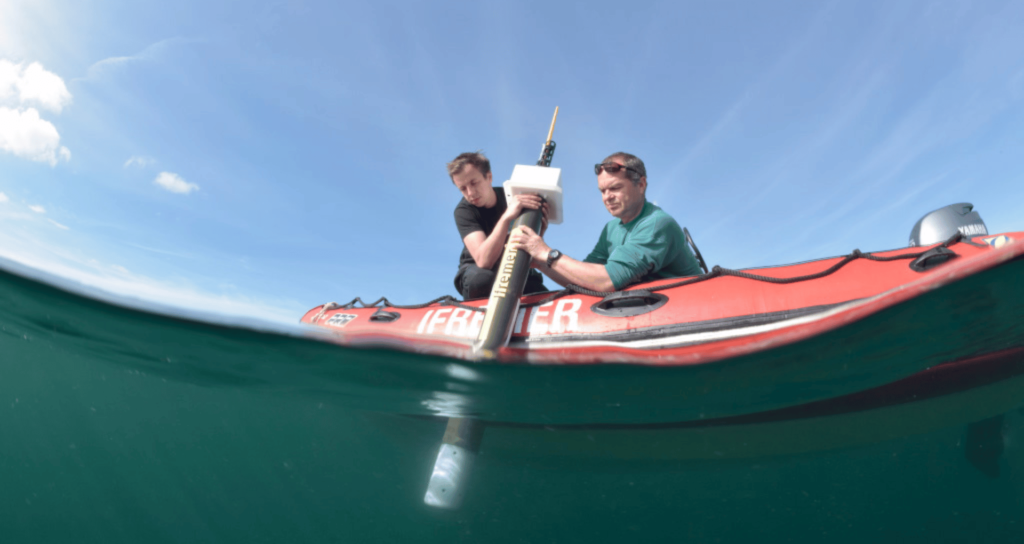
Rather than relying on one ship or one instrument, the mission brings together a small fleet of observing platforms. Photograph of an Argo float deployment © Olivier Dugornay:Ifremer.
Two SeaExplorer gliders are planned for deployment around the beginning of July. The gliders, carrying sensors for pH, pCO2 and acoustic measurements, are expected to travel close to the research vessel’s soute with a possible round-trip mission lasting several weeks. By moving through the water column, the gliders can collect measurements below the surface and help show how carbon-related variables change across the section.
At the surface, the Sailbuoy is being prepared to carry CaPASOS, a compact pCO₂ system designed for autonomous platforms. This is important because established ship-based CO₂ systems can provide very high-quality measurements, but the routes of the ships can limit the geographical coverage of the observations. A smaller system on the Sailbuoy could help extend surface-ocean CO₂ observations beyond what can be achieved by research vessels alone.
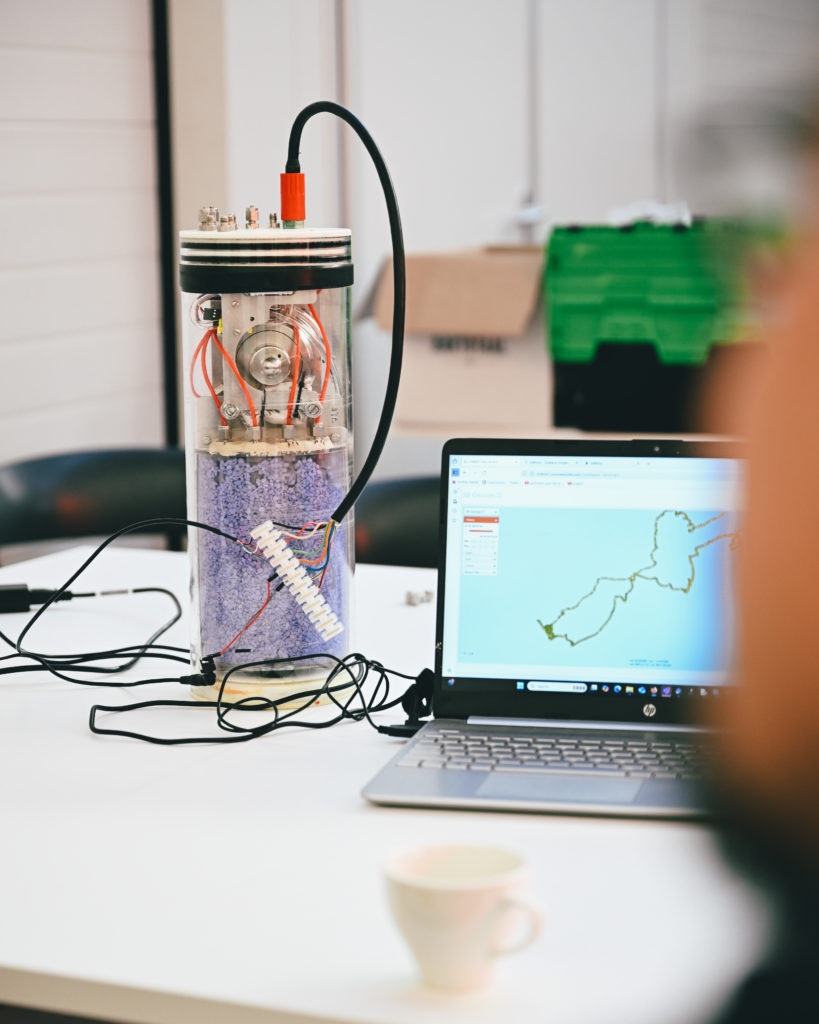
The mission will also include Argo-type profiling floats. A PROVOR CTS5 float equipped with oxygen, pH and acoustic sensors is planned for deployment either before or during the cruise, while an ARVOR-type float measuring temperature and salinity is planned for the Gulf of Lion shelf. These floats will continue observations after the cruise, extending the mission beyond the time that research vessel Gaia Blu is at sea.
Comparing ship-based and autonomous platforms
By combining ship-based measurements with autonomous platforms, the Northwestern Mediterranean demonstration will contribute to understanding how future ocean observing systems can provide more continuous, spatially distributed and cost-effective information on the ocean carbon cycle. Last year’s similar demo mission at the Porcupine Abyssal Plain station in the Northeast Atlantic gave the teams a lot of new insight that will be of use in this demonstration as well.
“The experience gained in data processing, Sailbuoy deployment and of the Glocal Oceanic (GO) system will be very useful in this mission”, Laurent Coppola describes.
Follow GEORGE on LinkedIn, BlueSky or X for more updates!
The demonstration mission on Gaia Blu is supported by a Transnational Access Call by Sustainable Blue Economy Partnership SBEP. Read more here.