

GEORGE aims to strengthen the skills and competencies of marine Research Infrastructure (RI) staff and support the adoption of new ocean observing technologies and data management practices. The project combines hands-on, face-to-face training with an open online learning environment, allowing participants to gain practical experience with technologies while also providing flexible access to learning materials for the wider marine community.
Together, these activities support knowledge exchange between scientists, technicians and engineers from the three participating Research Infrastructures – ICOS ERIC, Euro-Argo ERIC and EMSO ERIC – as well as universities, research institutes and industrial partners developing sensors and observing platforms.
Technical Forum: Hands-on training and knowledge exchange
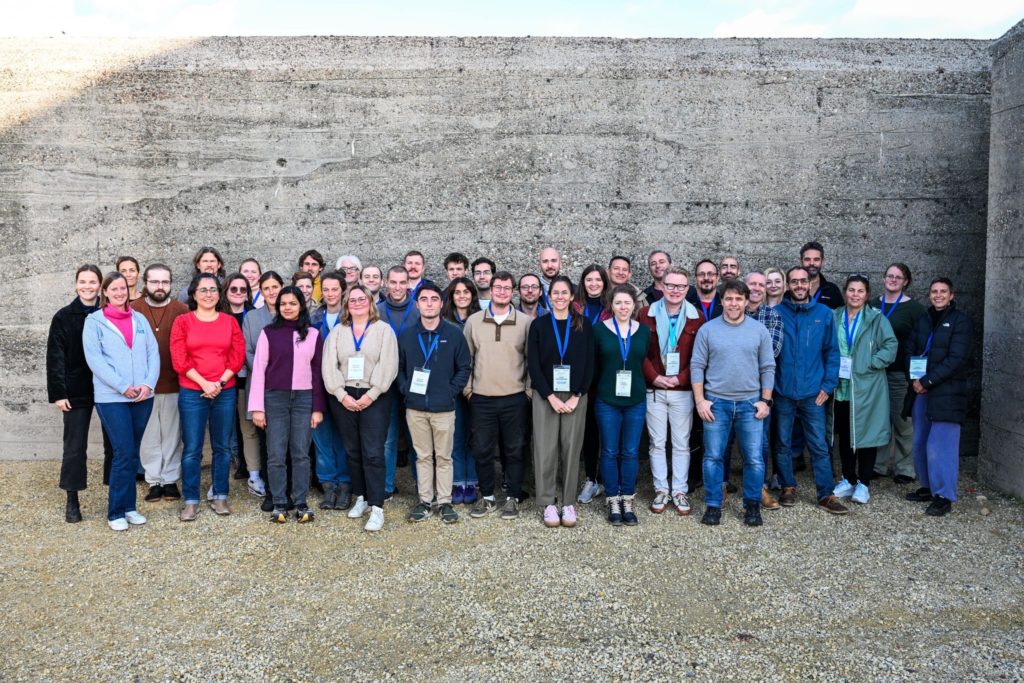
GEORGE organises three face-to-face training sessions for Research Infrastructure technicians and other marine observation professionals. Each one of these training sessions, or Technical Forums, focuses on a different part of the ocean observing value chain: platforms, sensors and data management.
The first training session was organised in Villefranche-sur-Mer, France, in 2024 and focused on ocean observing platforms. The second session, hosted by VLIZ in Ostend, Belgium, in 2025, focused on the sensor technologies developed in GEORGE. Participants gained practical experience with the instruments, including deployment and testing at the Marine Station Ostend tank facility.
The third training session, organised in Helsinki, Finland in September 2026, focuses on marine data management and jointly produced field data, bringing together expertise from ICOS ERIC, Euro-Argo ERIC and EMSO ERIC. The training will explore processes for handling data across Research Infrastructures, including data quality assurance and quality control.
The face-to-face Technical Forums were complemented by a series of webinars introducing how data are produced, processed, stored and made accessible within the participating Research Infrastructures. The webinars were organised in May–June 2026, and recordings are available on the GEORGE YouTube channel.
The online training platform
Alongside its hands-on training programme, GEORGE has developed an open online training platform for autonomous marine observation technologies. The platform is delivered as a Massive Open Online Course (MOOC) and was developed by the University of Helsinki using learning materials contributed by experts from across the GEORGE consortium. It is free of charge and open to everyone, with particular relevance for technicians, engineers, scientists and students interested in autonomous marine observations.
The online course enables learners to study at their own pace and extends the knowledge developed through GEORGE well beyond the participants of the face-to-face sessions. It is designed both for newcomers to ocean observation and for professionals seeking more detailed technical information.
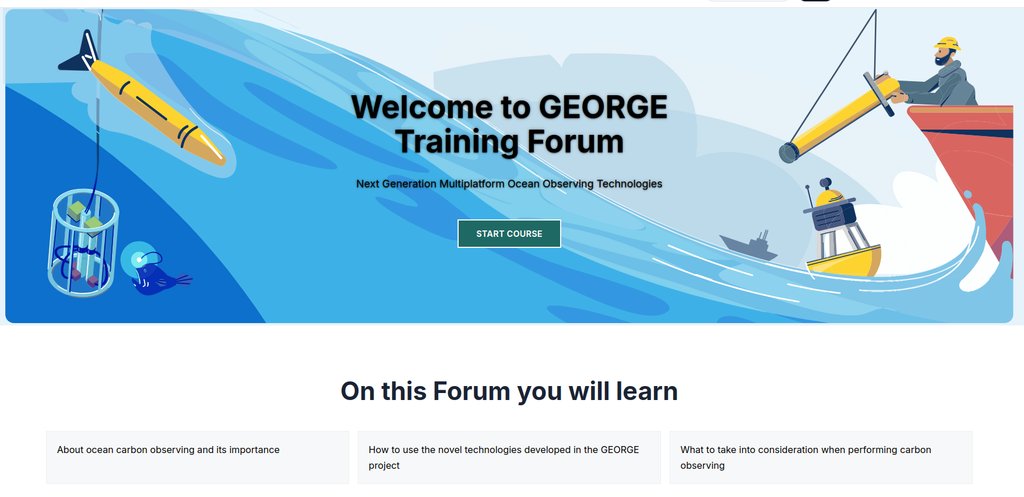
The learning materials are organised into four chapters:
• Introduction to Ocean Carbon Cycle & Ocean Observation Technologies – an introduction to the ocean carbon cycle and the fundamentals of ocean observing.
• Platforms – an overview of commonly used ocean observation platforms, including how and when they are used.
• Sensors – an introduction to sensor technologies for measuring key ocean carbon parameters, including pCO₂, pH, total alkalinity (TA) and dissolved inorganic carbon (DIC).
• Data management – an overview of how marine observational data are produced, processed, stored and made accessible within major European Research Infrastructures.
The course combines text with photographs, illustrations, figures, demonstration videos and optional interactive exercises. Some materials provide detailed, practical instruction in the use of specific technologies, helping learners understand not only the scientific principles behind the instruments but also how they are set up and operated.