
Throughout 2025, the GEORGE project made significant progress in technology development, training and international visibility. The year’s news stories highlight how the consortium advanced its scientific and technical goals while strengthening cooperation within the European ocean observing community. Below is an overview of the key achievements from January to December.
Progress in ocean data integration and pCO₂ data quality
In January 2025, GEORGE reported advances in harmonising ocean carbon data and improving pCO₂ data quality. The work focused on integrating data flows across the three Research Infrastructures and refining methods for improving the reliability of carbon system measurements. These developments support the long-term objective of creating more consistent and interoperable carbon observations across European marine systems.
One example of such development is a special calibration facility for marine carbon observations.
“Within Europe we are lacking an established calibration facility for instruments that are monitoring the marine carbon system. In GEORGE, we will develop a prototype of a calibration rig in strong collaboration with the three RIs and associated stations. While focusing on the calibration of carbon variables, options for a future extension towards other variables of interest will be evaluated. The design will be based on technology and methodologies that are acknowledged by the community”, commented Tobias Steinhoff, co-lead of the GEORGE WP4.
Read more in GEORGE makes progress in ocean data integration and pCO2 data quality improvement (from February 2025)
New autonomous sensors tested in a deep-sea environment
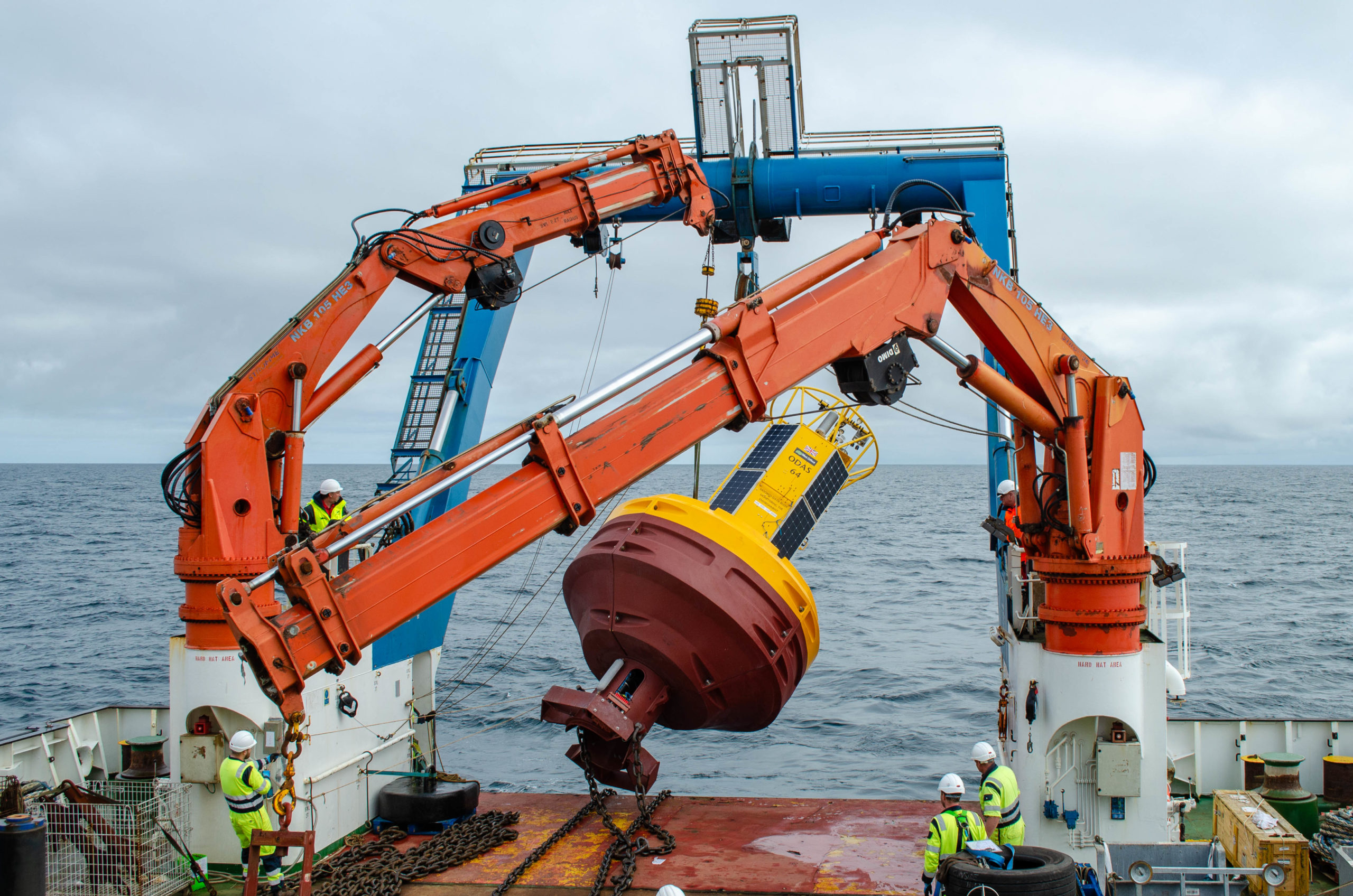
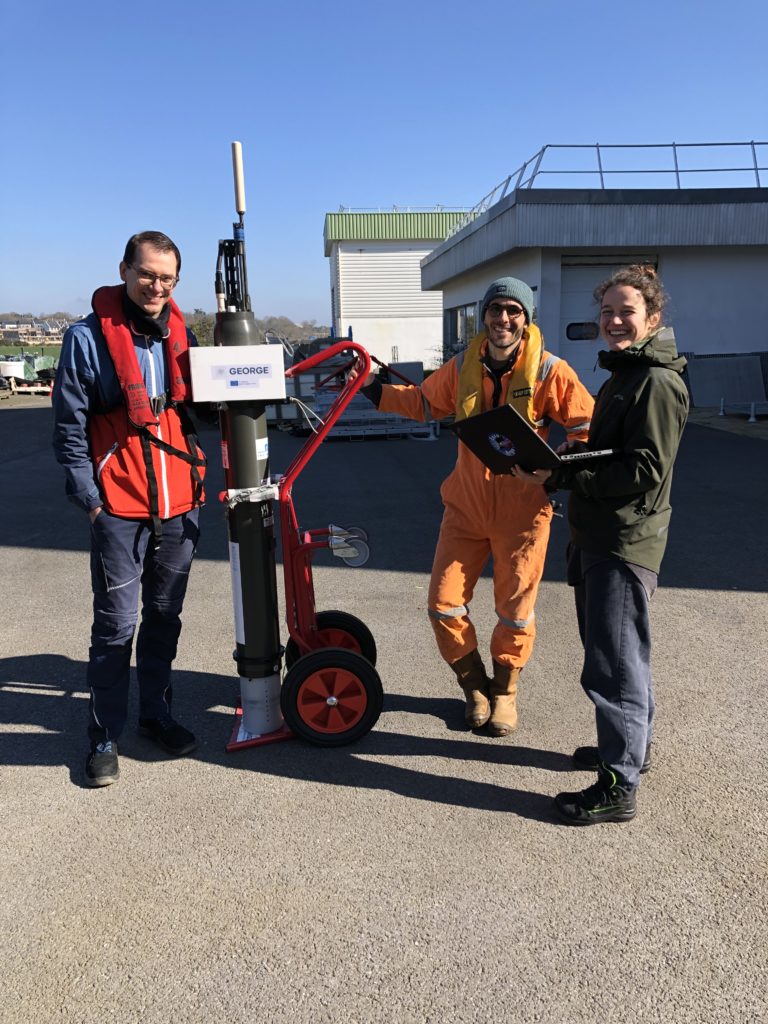
In June 2025, GEORGE partners engaged in a multi-RI demo mission to deploy new autonomous sensors for carbonate system measurements in a deep-sea environment for the first time. The instruments were tested at the Porcupine Abyssal Plain (PAP) Sustained Observatory in the Northeast Atlantic. This deployment will provide valuable information on how the sensors perform under real operational conditions and marks an important step towards validating these new technologies for long-term observing.
“Being able to characterize the carbonate system autonomously over a whole year would be a big success, but so would be sending an autonomous surface vehicle from shore and measuring all the way to the PAP site and back, or 12 months of autonomously collected and preserved samples for carbon analysis. But demonstrating that all these technologies can work in unison and produce valuable in situ observations for understanding ocean carbon cycling – that will be the ultimate success”, Socratis Loucaides, the lead of the GEORGE demonstration commented ahead of the mission.
Read more in New autonomous sensors developed in GEORGE tested for the first time in a deep-sea environment in the Northeast Atlantic (from May 2025) and New autonomous Total Alkalinity sensor improves ocean carbon measurements (from April 2025)
Three successful side events at the 3rd UN Ocean Conference
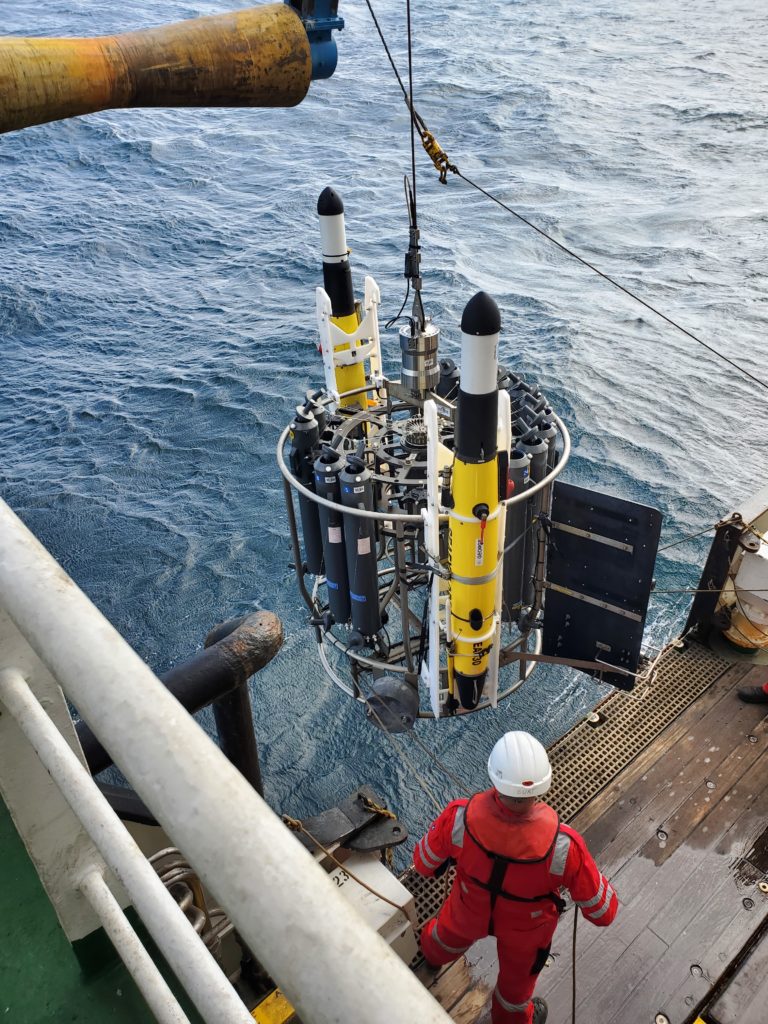
In June 2025, GEORGE organised three side events at the 3rd UN Ocean Conference in Nice. The events covered themes related to ocean carbon observations, data integration and collaboration across research infrastructures. The sessions offered an opportunity to present GEORGE’s progress to a global audience and to engage with international stakeholders working on ocean observing, climate monitoring and marine policy.
Read more in Three successful side events hosted at the 3rd UN Ocean Conference (from June 2025)
Technical Forum II connected technology developers and users
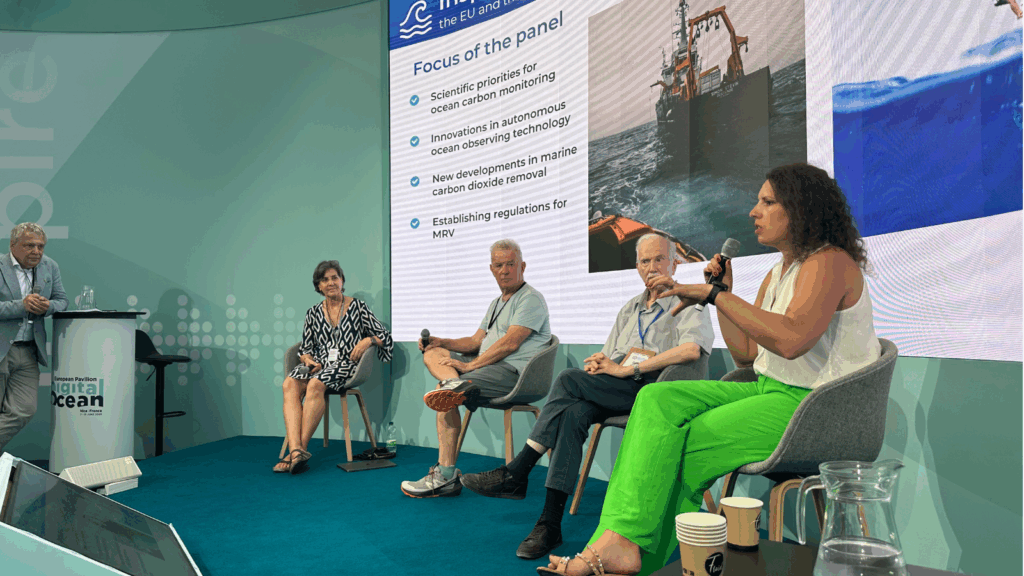
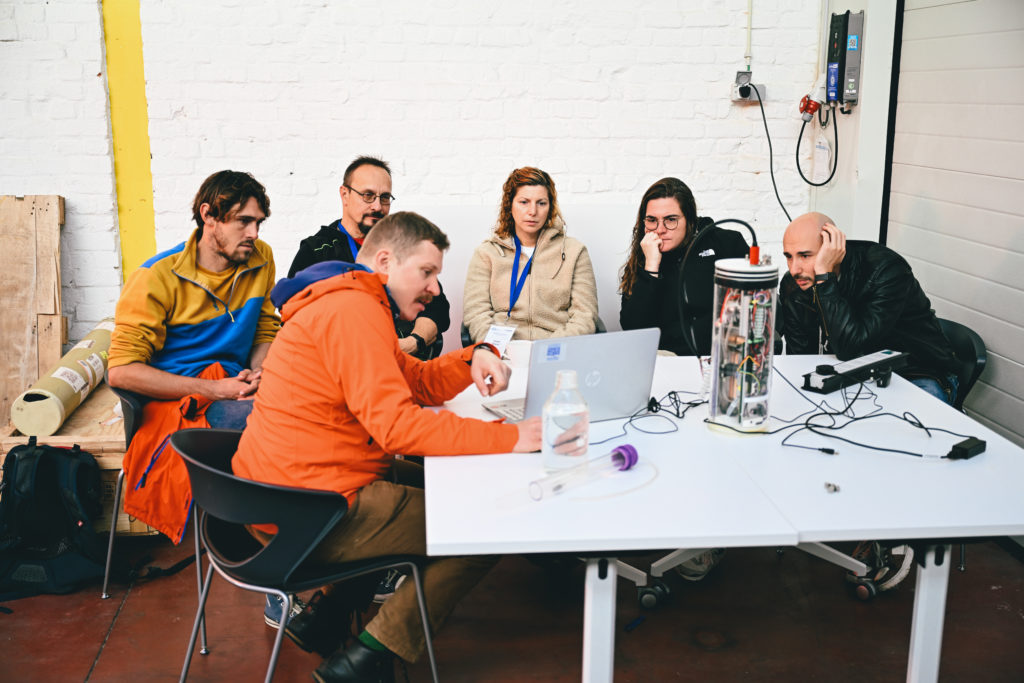
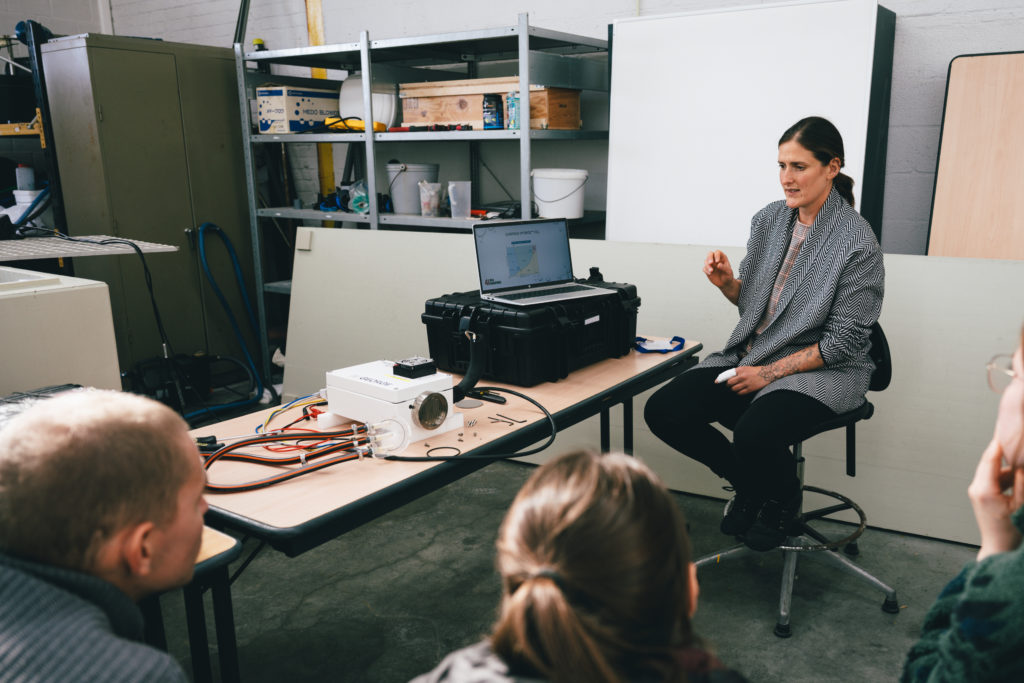
In October 2025, the second Technical Forum was held at the Flanders Marine Institute in Ostend, Belgium. The training session gathered 32 participants from 11 countries, including sensor manufacturers, researchers and operators from the three participating Research Infrastructures. The programme included hands-on demonstrations, discussions on sensor development and opportunities for users to provide feedback. The Technical Forum plays an important role in supporting co-development between technology developers and end users.
“Sensors, technology and the people using them are at the forefront of observations in natural sciences and so is in the ocean carbon biogeochemistry sphere. The GEORGE project is focusing on the new generation of instrumentations and sensors used for marine carbon related parameters, such as dissolved inorganic carbon, total alkalinity, pH and partial pressure of carbon dioxide, so it is essential to present the new capabilities to the users (technicians, engineers and researchers)”, Thanos Gkritzalis, Marine Sensors Engineer at VLIZ and Principal Investigator of two ICOS Ocean Stations commented before the training.
Read more: GEORGE Technical Forum II brought technology developers and users together and The second GEORGE Technical Forum is starts today in Ostend, Belgium (from October 2025)
See more photos from the training here (available for project partners).
GEORGE featured as CORDIS Project of the Month
In December 2025, GEORGE was highlighted as the CORDIS Project of the Month. The feature presented the project’s work in developing next-generation technologies for long-term autonomous ocean carbon observations. CORDIS profiles projects that show scientific excellence and relevance for European research priorities, and the selection provided increased visibility for GEORGE’s objectives and early results.
Read more in GEORGE featured as CORDIS “Project of the Month” (from December 2025).
New progress in acoustic sensor deployment
Later in December, GEORGE partners reported new progress in the integration of an acoustic sensor into a PROVOR CTS5 BGC Argo profiling float. The compact passive acoustic sensor was successfully integrated by NKE Instrumentation and Laboratoire d’Océanographie de Villefranche, and tested in the northwestern Mediterranean. The deployments demonstrated that acoustic recordings can be used to estimate surface wind speed from depth. The work shows how developments in GEORGE contribute to wider European efforts to improve autonomous ocean observing. The results from this trial are now available as a preprint (Delaigue et al., 2025).
“This project brought together such a good mix of people,” said Louise Delaigue, lead author of the study. “We had sensor engineers, acousticians and oceanographers all working together. I’ve learned so much from the acoustic community. It’s been really supportive and collaborative.”
Read more from New progress in acoustic sensor deployment – contributions from GEORGE and TRICUSO projects (from December 2025)
Thank you for contributing to the success of the project or for following along in 2025!