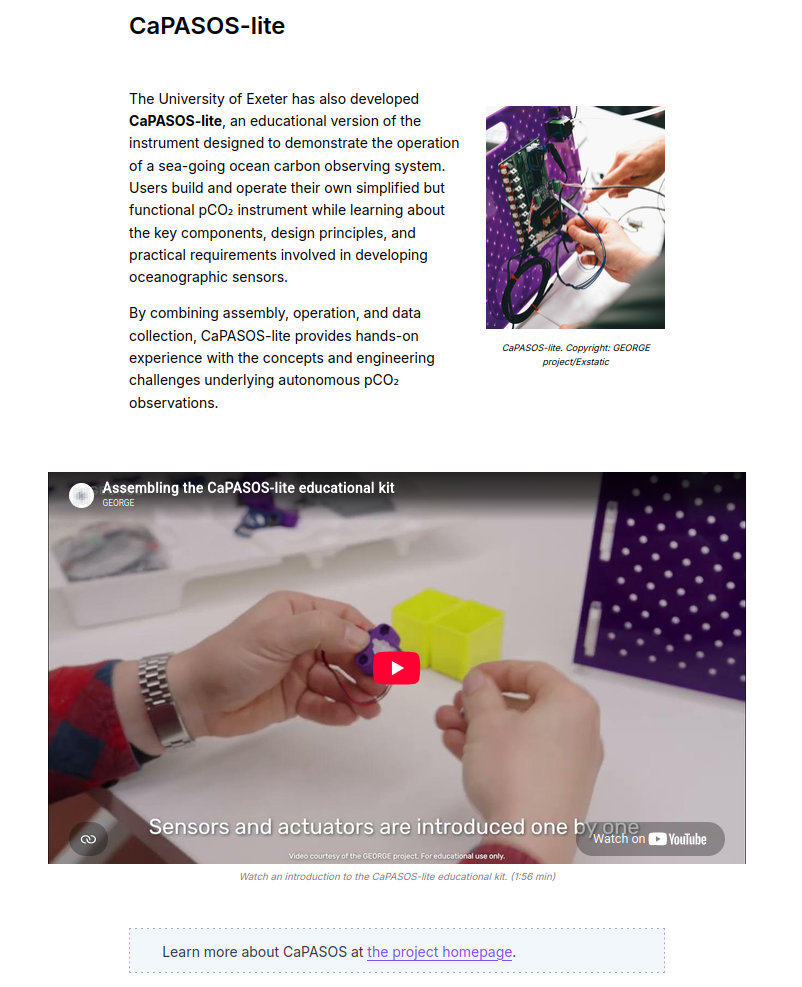

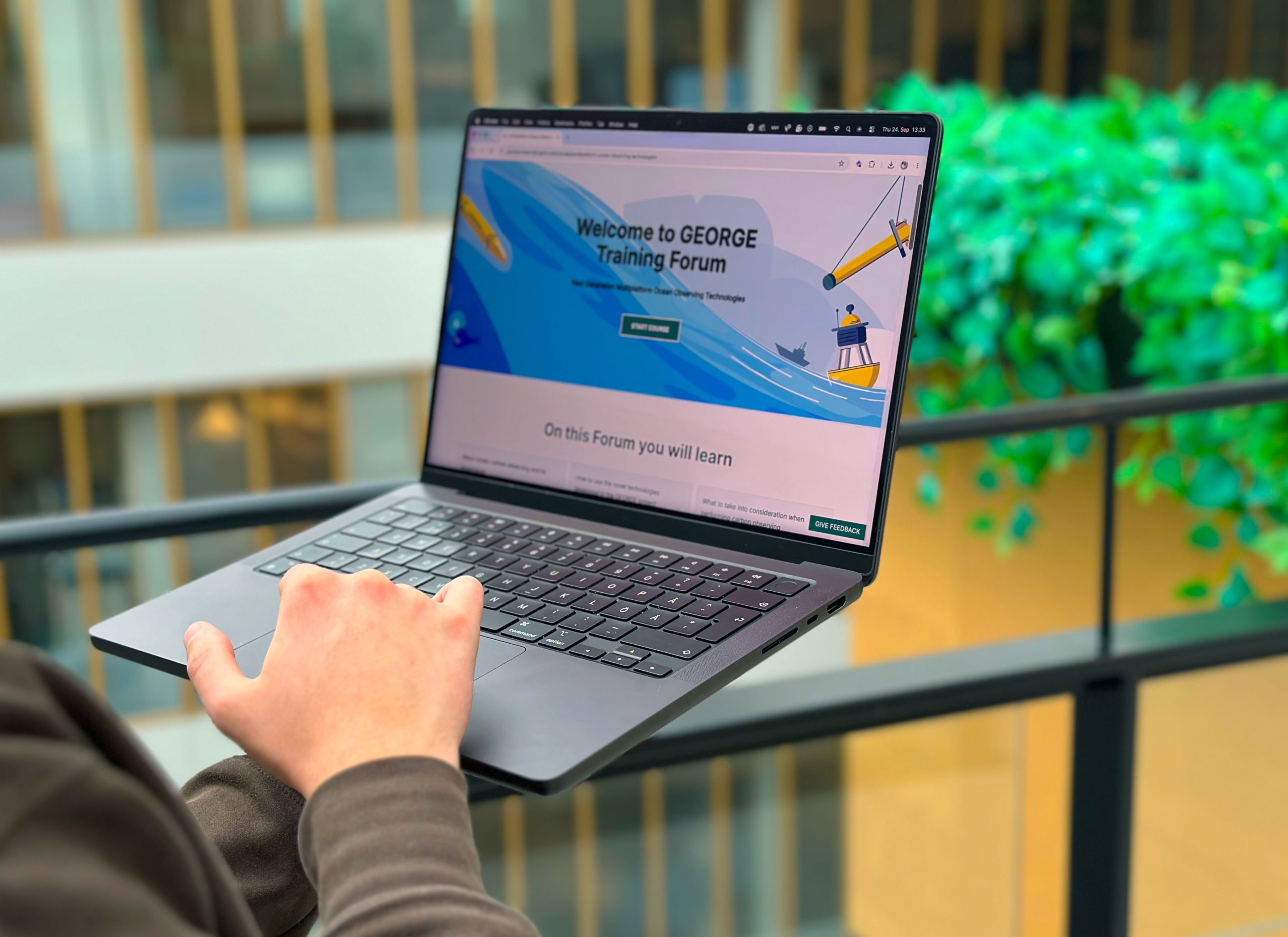
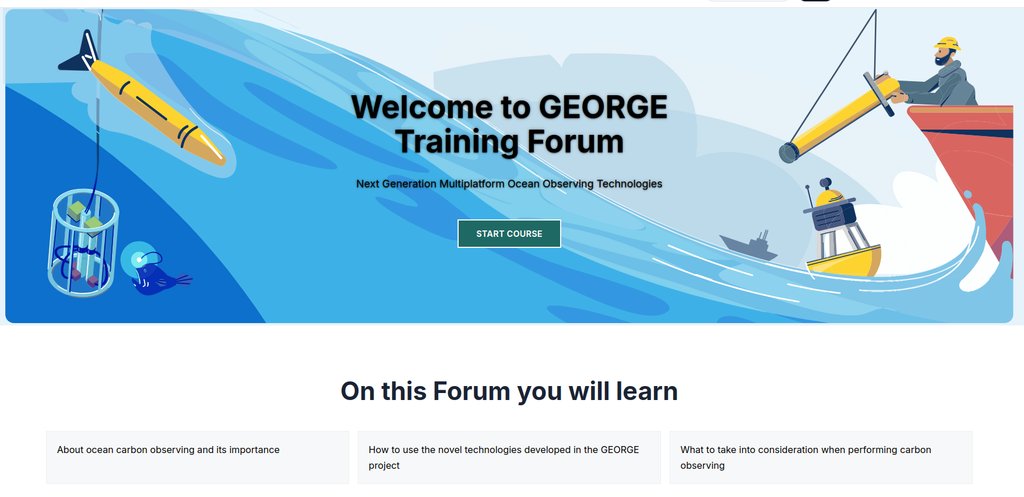
The GEORGE project has launched an interactive online training platform for autonomous marine technologies. The platform, executed as a Massive Open Online Course (MOOC), has been developed by GEORGE partner University of Helsinki, with materials produced collaboratively by the entire GEORGE consortium. The online training environment is open to all, but will serve especially technicians, engineers and scientists working with autonomous marine technologies or who wish to integrate them into their RI in the future.
The platform is an important step in the integration of the autonomous sensor and sample technologies and platform innovations developed in GEORGE into the marine research landscape more broadly. Training RI staff contributes to more harmonised ocean observations through shared methods, standard operating practices and data flows.
The GEORGE training platform, or MOOC, is designed to be an interactive and rewarding learning experience. MOOC, or a Massive Open Online Course, is an online course designed to provide open and flexible access to learning materials. University of Helsinki, the GEORGE partner responsible for its execution, has a known track-record for producing a variety of high-quality MOOCs, ranging from artificial intelligence to forest ecology, criminal law, social work, programming and cyber security.
The content of the GEORGE online training platform is a result of a several years of work.
“Experts have contributed learning materials throughout the project. We wanted to make the learning experience as engaging, easy and flexible as possible, and to make it possible for users with busy work schedules to participate when it best fits their needs”, says Laura Sinikallio, Project Planner at University of Helsinki and Doctoral Researcher in Computer Science, who is leading the development of the GEORGE learning materials.
Four distinct chapters serve learners of different needs
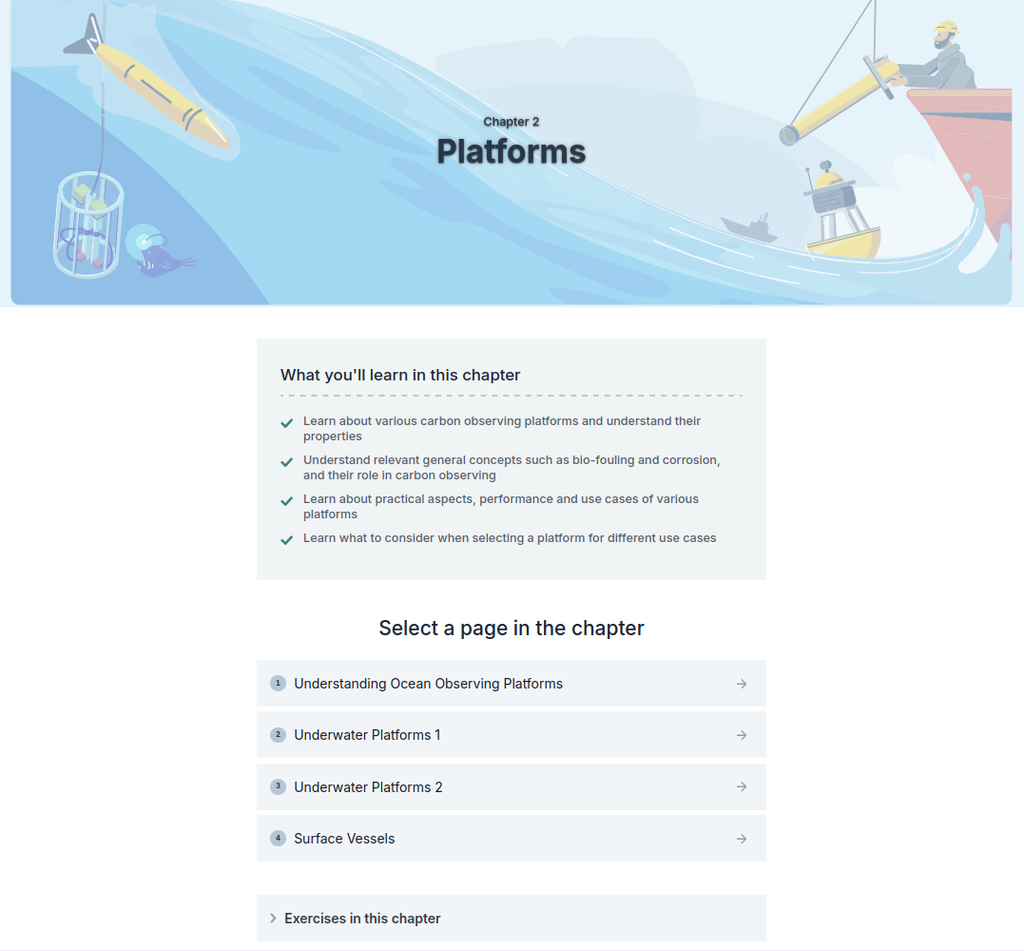
The materials on the GEORGE online training platform are organised under four chapters: Introduction, Platforms, Sensors and Data Management. The first chapter is intended to serve students of the field, while the remaining three require prior knowledge of ocean observation.
- Chapter 1: Introduction to Ocean Carbon Cycle & Ocean Observation Technologies: This chapter covers basics of ocean carbon cycle and ocean observing techniques, establishing understanding required for the following chapters.
- Chapter 2: Platforms: This chapter covers some common ocean observation platforms, how and when to use them. It also discusses central concepts and aspects related to marine observation platforms.
- Chapter 3: Sensors: This chapter introduces sensors used for measuring the four key ocean parameters: pCO2, pH, TA, and DIC. It also discusses the central concepts and techniques behind the sensors.
- Chapter 4: Data management: This chapter provides an overview of how data is produced, processed, stored, and made accessible within major European marine research infrastructures.
The learning materials include texts, photographs, illustrations and figures as well as demonstration videos. To facilitate learning even more effectively, the platform also contains embedded exercises. The exercises are not mandatory, and the user can access the whole course even without completing the exercises.
Comprehensive introduction to autonomous observing technologies
The level of detail in the material is intentional. Learners can, for example, get a full introduction to some of the technologies, almost equivalent to being in the same room with an experienced scientist or technician.
“The ICOS station verification system is, for example, explained in detail by GEOMAR’s Tobias Steinhoff through text and videos. The user is taught everything from how to set up the instrument, to supplying water and gas and configuring the software”, Sinikallio says. “I am very happy that GEORGE partners have contributed materials so actively and shared their time and expertise.”
The course materials can be completed without registering, however those who wish to complete exercises, are required to register. The entire MOOC course is completely free-of-charge and open to all. The GEORGE team is developing materials iteratively and welcomes feedback from all users.
“This is an important step in making the GEORGE technologies accessible and available to users outside the project consortium. We are very excited to launch this platform and are looking forward to the feedback from the community”, says Janne-Markus Rintala, Science Officer at ICOS and coordinator of the GEORGE project.