
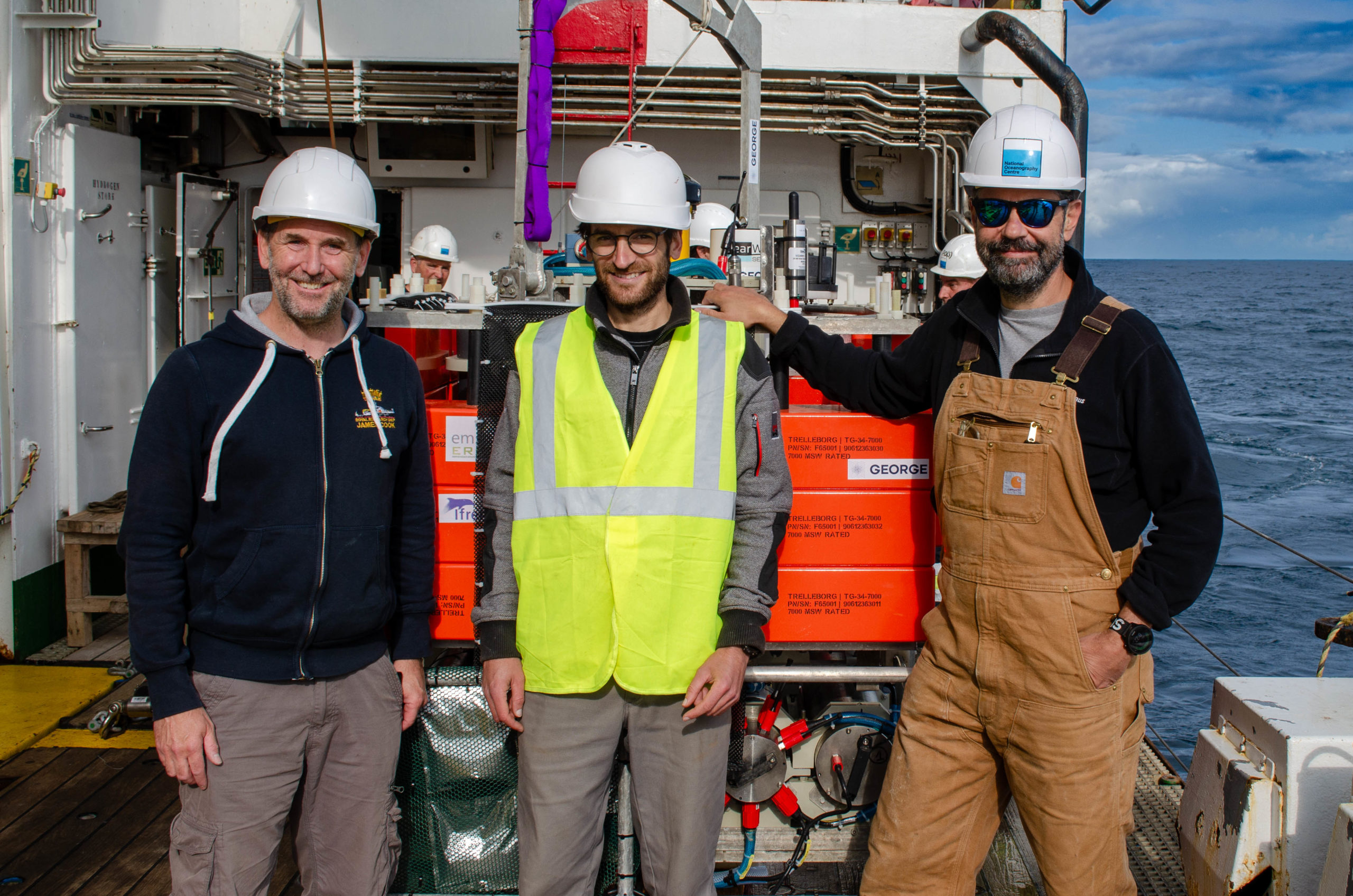
The EMSO Generic Instrument Module, EGIM, equipped with state-of-the-art sensors developed in GEORGE, will be retrieved from the bottom of the Atlantic Ocean in May 2026, almost one year after its deployment. The retrieval will be the culmination of a lot of work done in GEORGE.
In June 2025, GEORGE teams went on a three-week journey to deploy a series of autonomous ocean observing platforms at the Porcupine Abyssal Plain Sustained Observatory (PAP), a long-standing observational site operated by GEORGE partner National Oceanography Centre (NOC). The site is also part of the ICOS network of Ocean stations.
The mission’s main scientific goal was to fully characterise the ocean carbonate system using autonomous technologies developed or optimised in GEORGE. The teams deployed a range of autonomous platforms, including underwater gliders, floats and surface ocean vehicles and mooring.
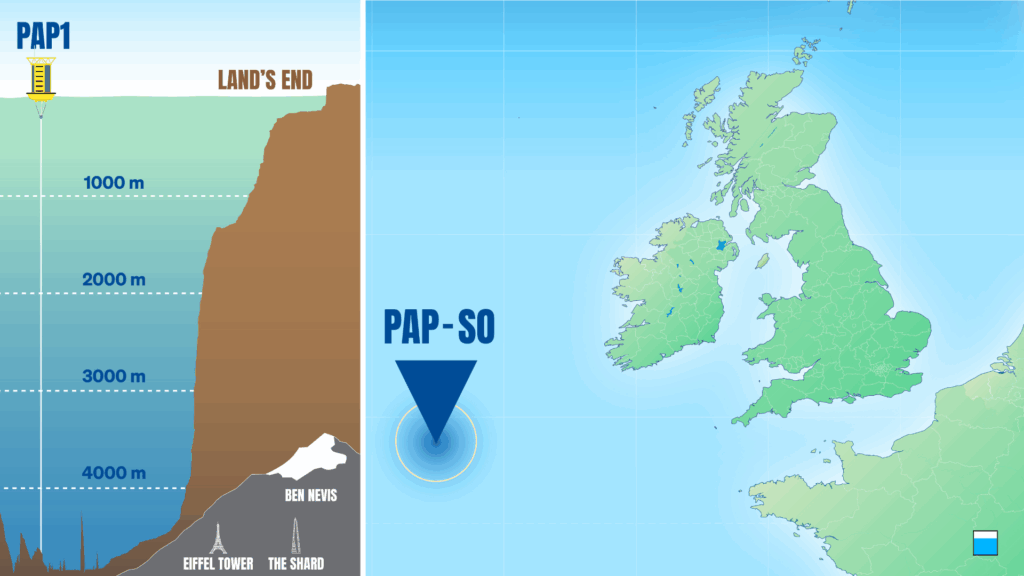
The only GEORGE platform that was left behind for a long-term autonomous deployment was the EGIM. The deep-sea platform, equipped with sensors measuring total alkalinity (TA) dissolved inorganic carbon (DIC), partial pressure of carbon dioxide (pCO2) and acidity (pH), was lowered down to 4 500 meters. This represents one of the deepest deployments for the platform.
This month, the EGIM will finally be retrieved from the seabed, as NOC’s yearly research expedition reaches the site. Along the EGIM, teams will retrieve the autonomous seawater sampler, one of the major innovations that are being developed in GEORGE that will allow the validation and calibration of sensor data.
Hydrostatic pressure at 5 kilometres deep puts instruments under test
The Porcupine Abyssal Plain (PAP) observatory, located in the Northeast approximately 500 kilometres west of Ireland is regularly exposed to harsh conditions, including large waves and winter storms. These conditions, combined with the site’s 40-year-long time series of abyssal observations, makes it a perfect testing site for new technologies.
The main challenge facing the EGIM would be the immense pressure that exists at nearly 5 kilometres deep. This puts instruments and mechanical fixings under a lot of stress, says Socratis Loucaides, who leads the work on sensors and sampler innovations in GEORGE and led the GEORGE mission at PAP last year.
“The instruments are under constant hydrostatic pressure. That’s a lot of pressure to put onto instruments underwater for such a long time. They are still in a harsh environment because of the corrosive nature of seawater, but pressure is going to be the biggest challenge in this case”, he says.
For the autonomous sampler on the sea surface, the biggest challenge will be biofouling, which refers to the accumulation of marine organisms, crustaceans and algae on its surface. The hope is that the use of antifouling paint and other materials will help overcome this issue.
Rise from the seafloor to the surface can take hours
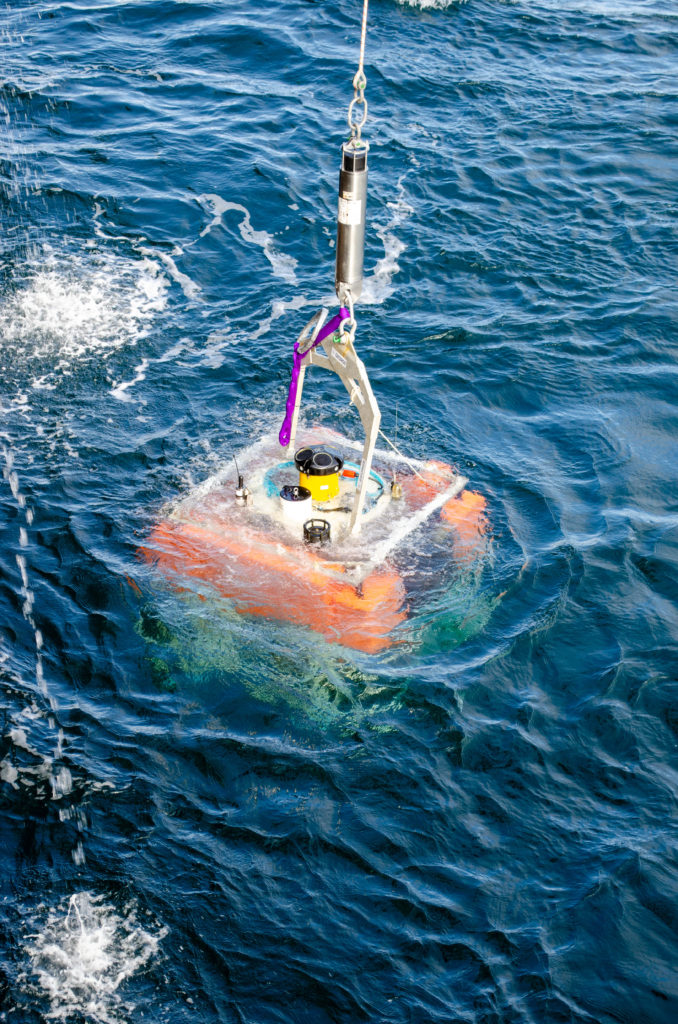
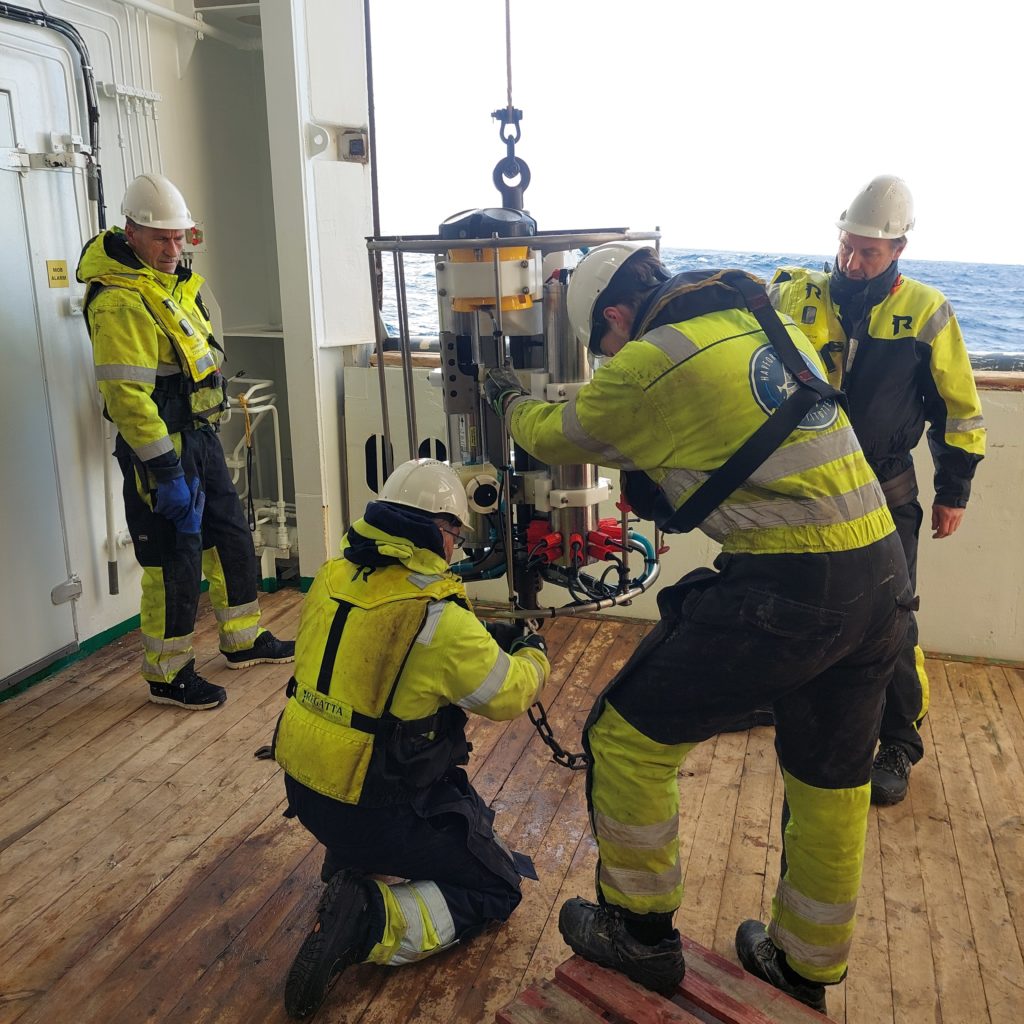
Retrieving the EGIM from the seafloor starts from locating the instrument, which has been attached onto a heavy weight that keeps it on the seabed. Once the instrument has been located, the team onboard the ship will remotely release the EGIM from its weight, allowing it to float to the surface. The process of retrieving the instrument can take several hours.
“The RRS Discovery will go to the known location of the EGIM and transmit a sound signal into the water specific to the acoustic release mechanism of the EGIM. Hopefully, once the acoustic release receives the signal, it will unhook from its weight and slowly start to rise towards the surface, as it is positively buoyant without its weight”, Loucaides describes.
“It will probably drift as it comes to the surface, so there will be a certain radius, potentially several kilometres around the ship where it could surface. However, it’s equipped with different transmitters and beacons, including lights, to help with spotting it at the surface”, he describes.
Data processing and quality control will take time
The EGIM has been sitting on the seabed in complete silence for a whole year. No data or information has been sent to the outside world. Once the platform is retrieved, the teams can start analysing its performance and accessing its data, which will give them answers to some of the big questions explored in GEORGE.
Immediately after the retrieval, the analysis will start by the crew onboard taking pictures of the instrument and trying to visually identify any issues or damages. After the initial checks, they will aim to connect to the EGIM and hopefully download its data onto a computer.
Socratis Loucaides is careful in setting expectations, but if everything goes according to plan, there will be some data to process.
“The best scenario is that we managed to collect some data for a significant amount of time. The cherry on top would be that the data would be good quality, and we could do some science with it”, he says.
“There’s a lot of work to be done on processing the data: taking out raw data and investigating instrument performance and then trying to calculate and correct the parameters the sensors measured. After that comes quality control of the datasets, putting everything into the right formats and files, and submitting the data to the right repositories, where it will be openly and freely available”, he says.