

What role do European projects play in climate resilience?
A new report from authors at the European Research Executive Agency (REA) maps 38 EU-funded Research Infrastructure (RI) projects contributing to climate resilience. GEORGE was selected for the analysis because its activities were considered directly relevant to climate resilience, particularly through observational data that can support the assessment of climate-related risks.
The report highlights Europe’s world-class scientific foundation for monitoring ecosystems, ocean change and other environmental processes.
GEORGE is classified within Observation and Monitoring, defined in the report as “projects that provide the continuous, high-fidelity baseline data required to detect emerging risks in real time.” This is the largest and most strongly represented part of the analysed RI value chain.
Strengthening the integration, accessibility and deployment of scientific capabilities
Several of the priorities identified by the report for the future of European RIs are closely aligned with GEORGE’s work, particularly stronger integration between infrastructures, better access to existing capabilities, and closer links between RIs, users and technology developers.
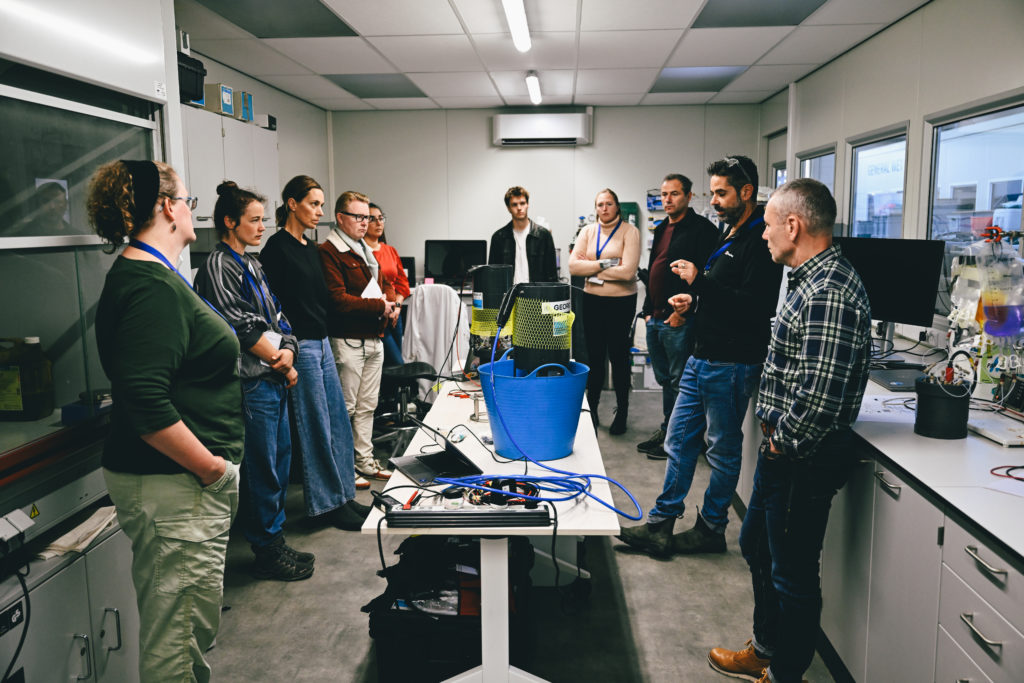
The report argues that the next challenge for European RIs is not primarily creating new scientific capacities, but strengthening the integration, accessibility and deployment of existing ones. GEORGE contributes to this by developing and testing new ocean carbon sensors across multiple observing platforms, harmonising methods and data flows between ICOS, EMSO and Euro-Argo, and working with technology companies to move promising instruments towards operational use.
Read the full report: European Commission, Directorate-General for Research and Innovation. (2026). Research infrastructures for climate resilience: Mapping the European portfolio across climate risks and adaptation pathways.