
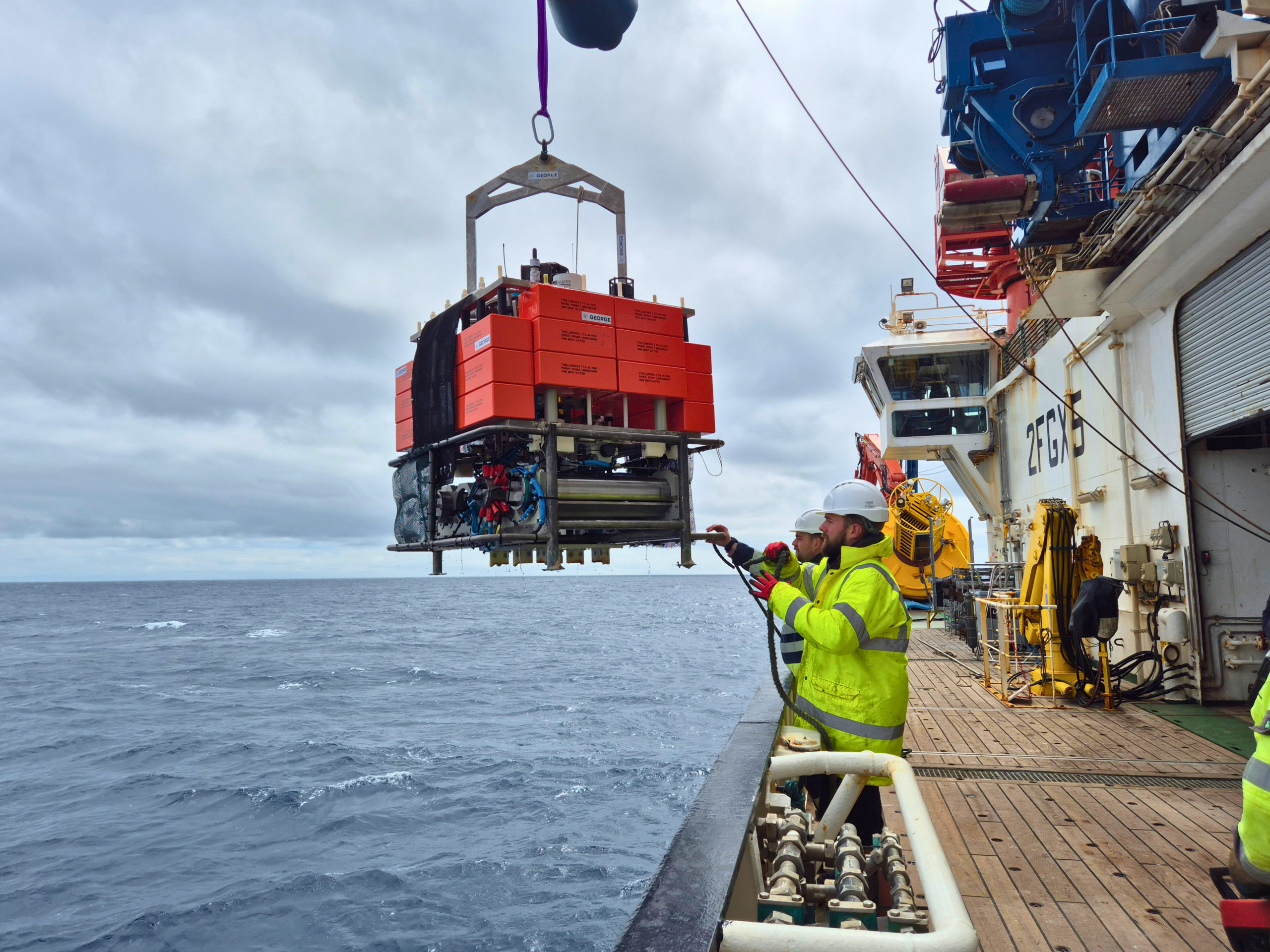
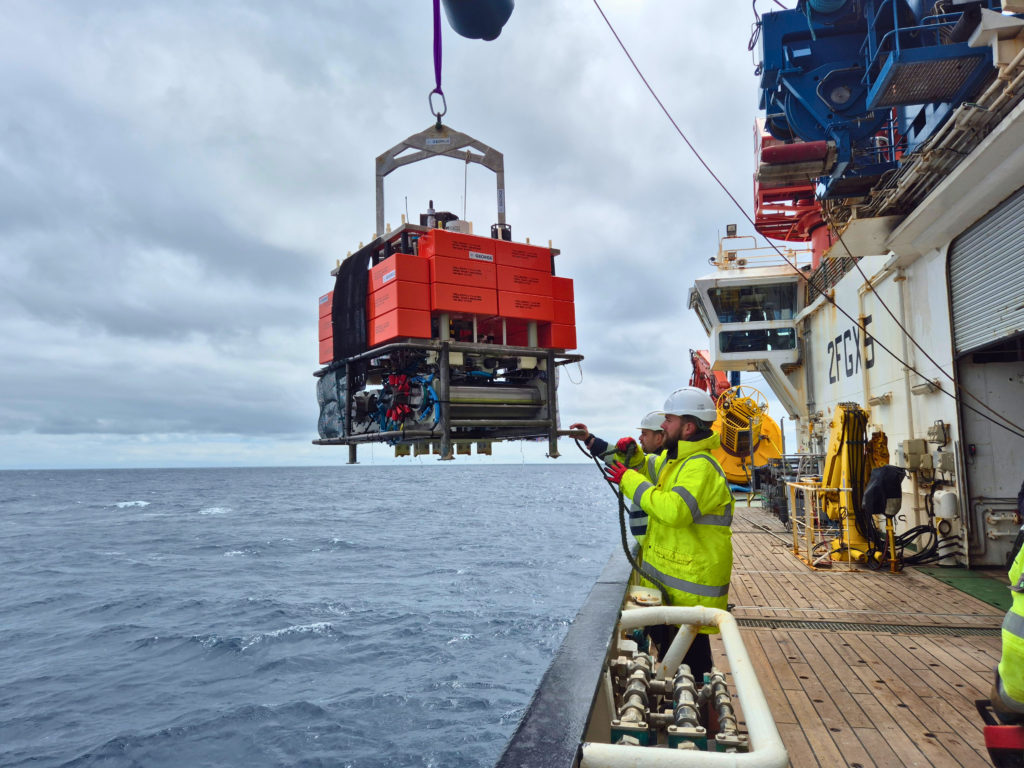
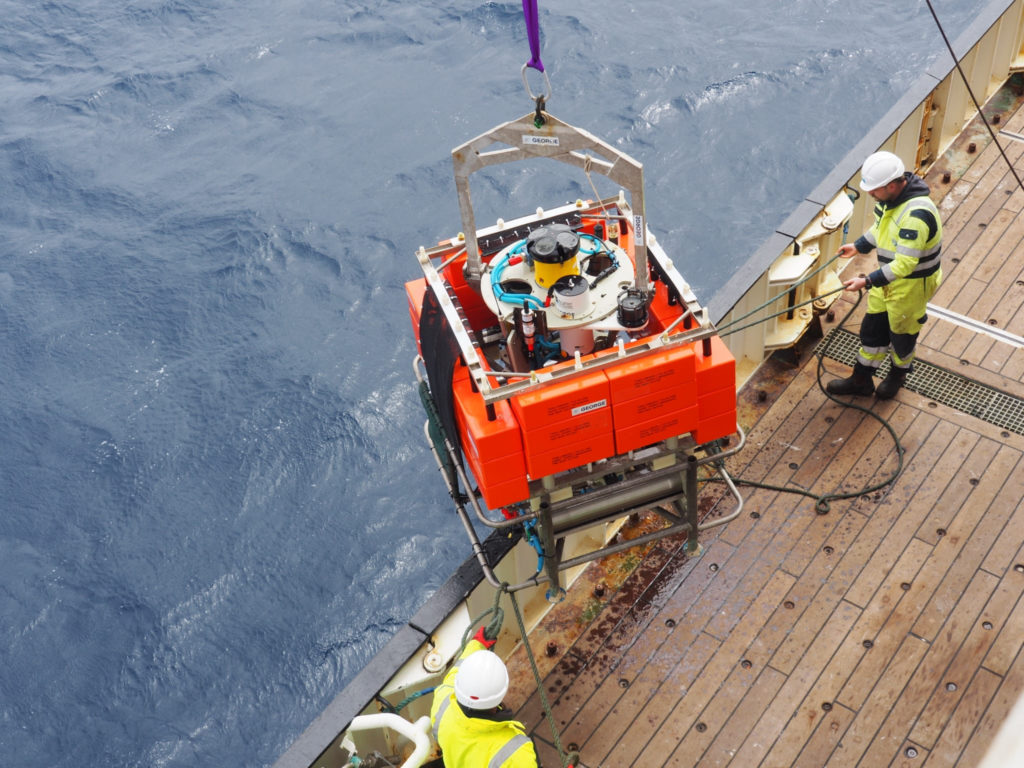
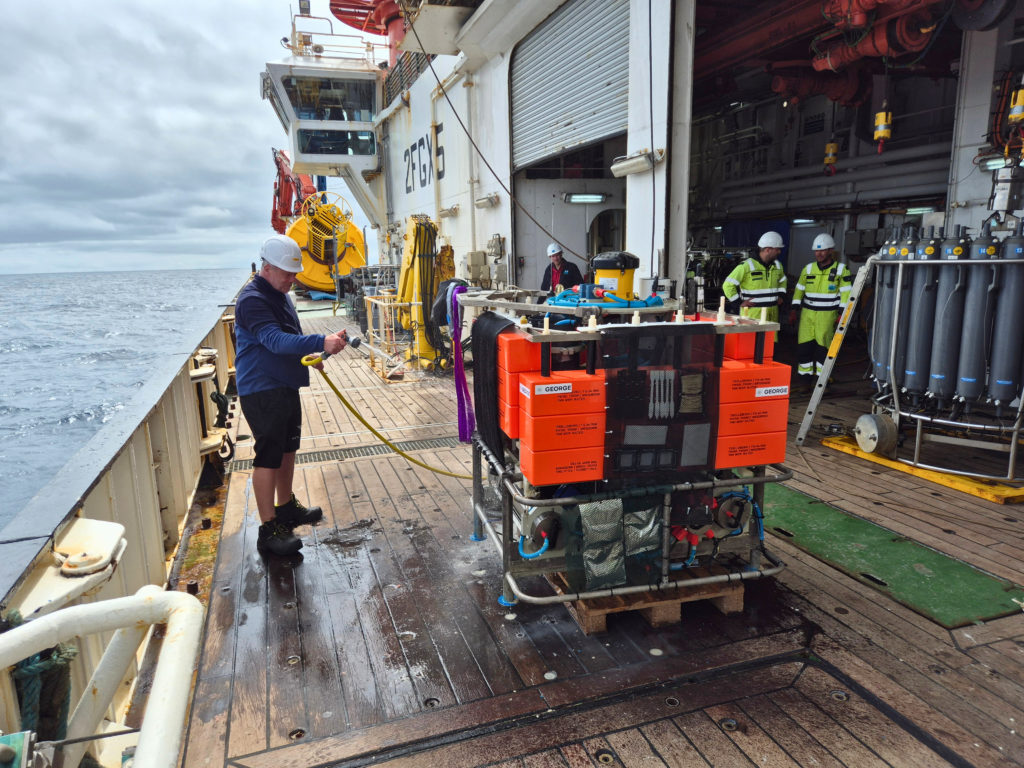
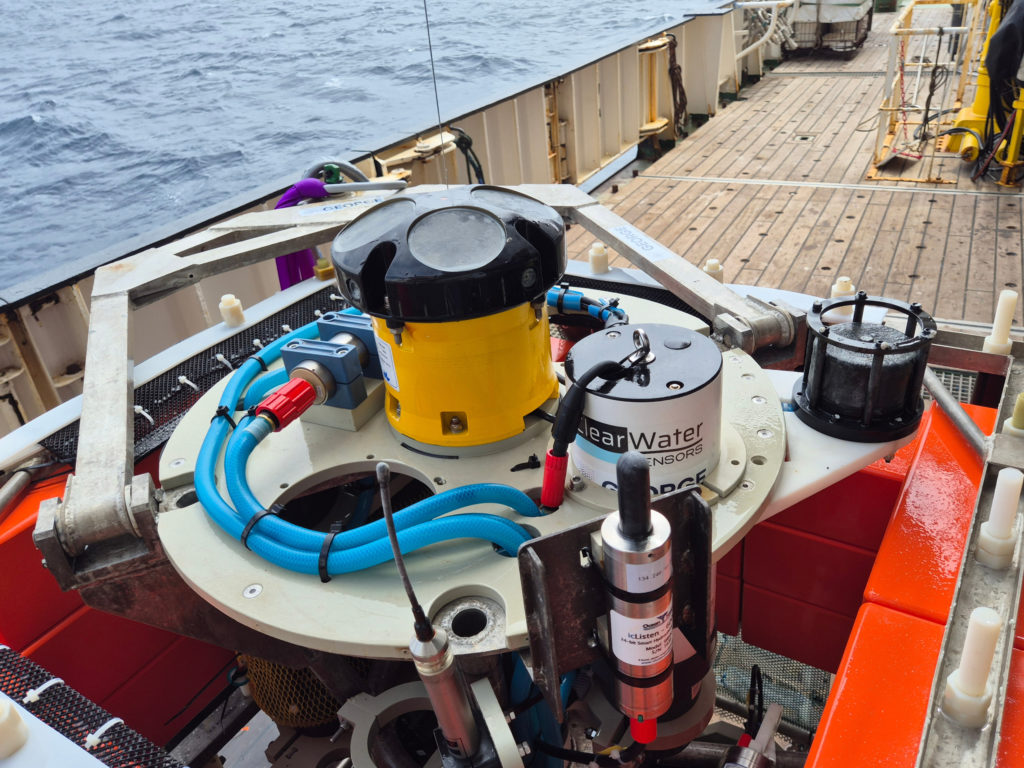
The deep-sea platform EGIM, fitted with state-of-the-art new sensors developed in GEORGE, was recovered on 12th May 2026 from nearly 5 kilometres below the surface at the Porcupine Abyssal Plain Sustained Observatory (PAP-SO).
The recovery took place as as part of the annual research expedition by GEORGE partner National Oceanography Centre.
This marks the end of the demo mission that began at the PAP site in June 2025, when the three Research Infrastructures involved in GEORGE – Euro-Argo, EMSO and ICOS – carried out multi-platform measurements at the same site at the same time.
“Each step is a challenge”
The recovery marks an important milestone for the project.
“The recovery of an instrument is always an existing and stressful experience, especially when it is the first time you deploy the equipment for so long in such a deep sea”, says Nadine Lanteri, who leads the EMSO French national branch and has been a significant figure in the development of the EGIM. “Each step is a challenge. First, you trigger the ascent using an acoustic signal and you feel a first relief when you get an acknowledgment from the seabed. Then, you monitor the slow ascent to the surface.”
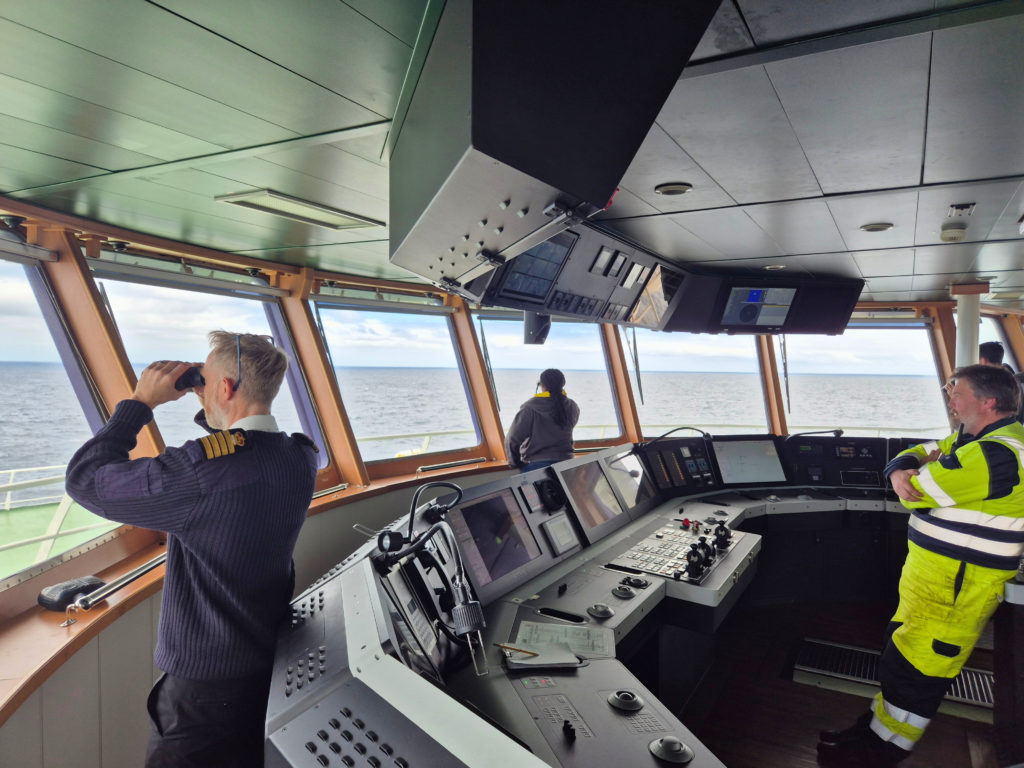
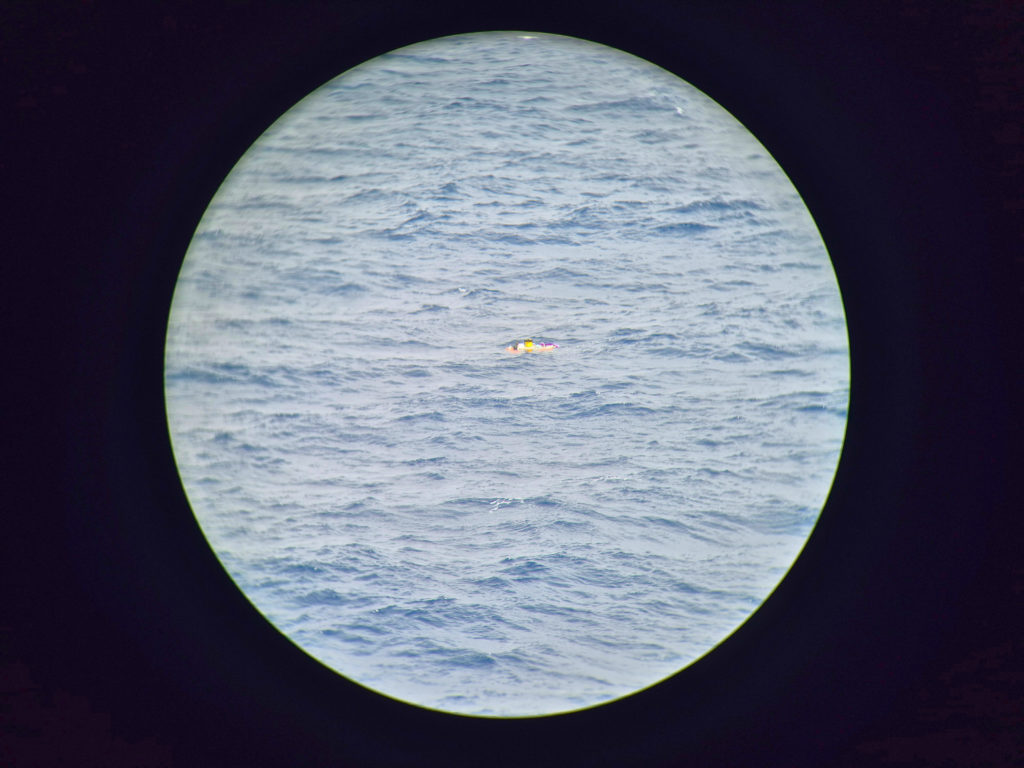
“At PAP, it took 5 hours for the EGIM to reach the surface. Then, you pray that the weather remains clement and that you can localise, approach, hook the system and haul it on board without damage. Finally, you connect to the data logger find out if the data is there, and if your efforts were rewarded. It seems that it is the case for this EGIM deployment – there was a significant amount of data recorded but we still need some time to check. Finger crossed!” Lanteri says.
Next step: data analysis
The next step for the team is to process the data. This work will contribute to the development of a joint data flow between the RIs, which has been a long-term goal of the project.
“The recovery means a great deal for the ocean observing community. It brings us closer to simultaneous measurements from the sea surface to the seabed, and supports collaboration between three leading marine Research Infrastructures as we begin working with joint data. I want to thank the skilled crew and staff onboard the research vessel, the scientists in GEORGE, as well as all those providing their valuable input in planning and carrying out GEORGE part of the expedition”, says GEORGE coordinator, Janne-Markus Rintala from ICOS.
See more photos from the operation below!
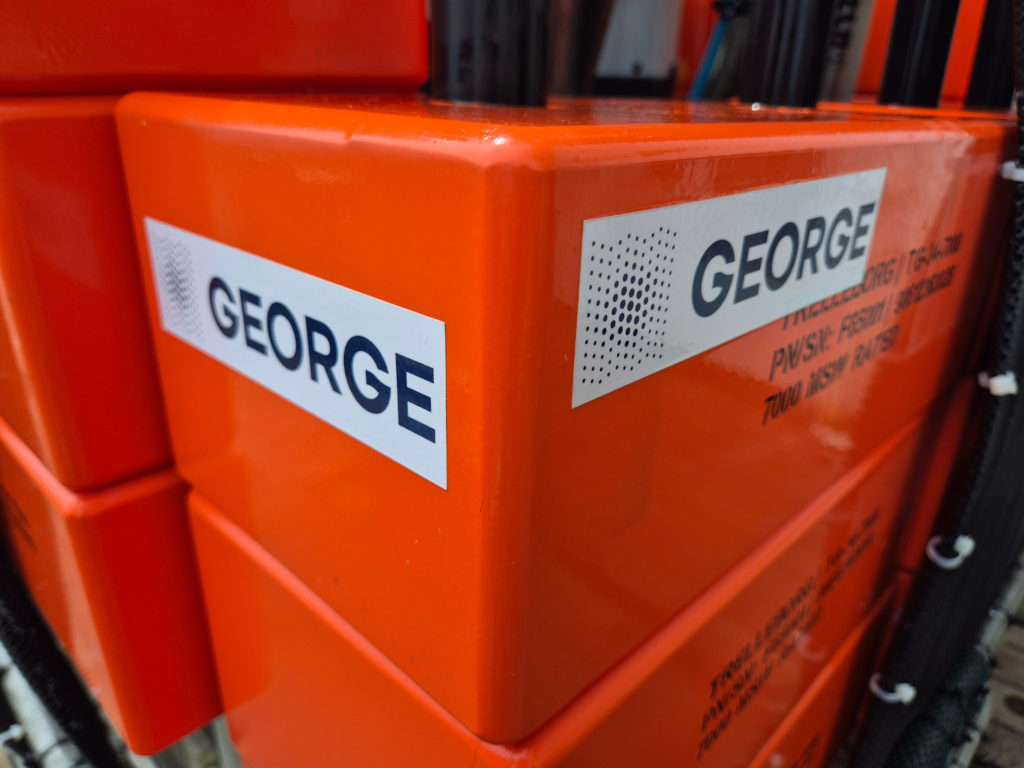
Photographs by Samuel Monk, National Oceanography Centre.