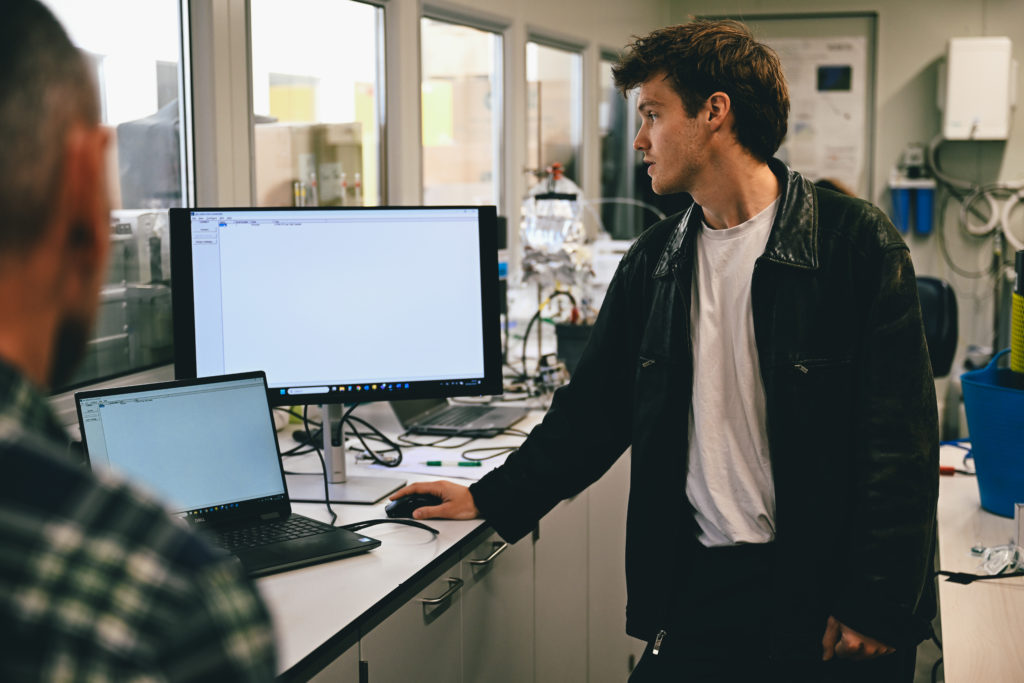

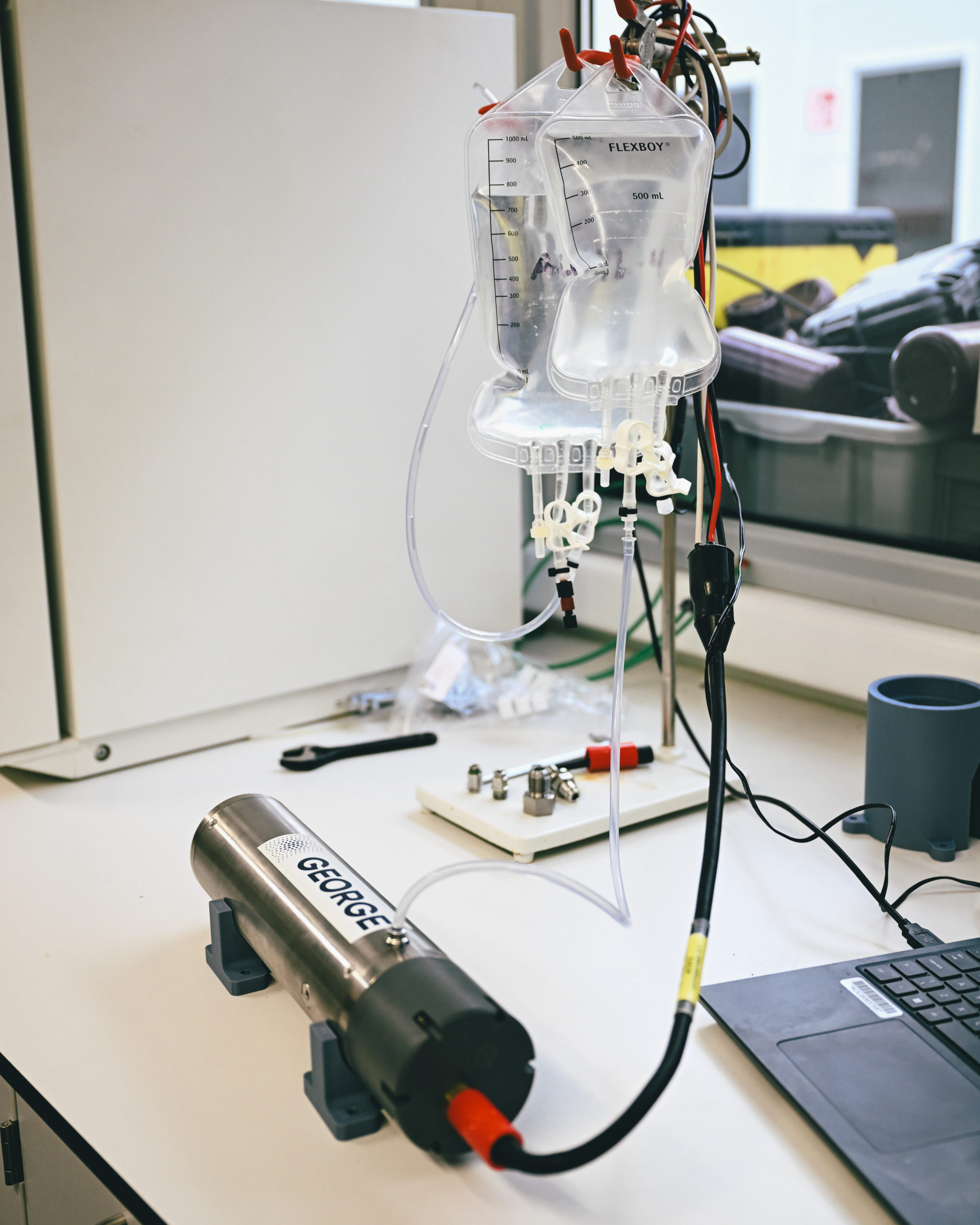
In this fourth part of the Q&A series, we interviewed Sam Castle, Design Engineer at the National Oceanography Centre (NOC), who has worked on developing a new autonomous sampler. The sampler is currently being put to the test in the Northwestern Atlantic during a year-long deployment alongside other technologies developed in GEORGE. In summer 2026, GEORGE teams aim to retrieve the sampler and evaluate how it performed.
Autonomous sampling is important especially over long deployments, because some autonomous sensors can drift over time, which may reduce the reliability of their data. Autonomous collection and preserving samples allows researchers to later validate or correct sensor measurements.
Sam Castle, Design Engineer, National Oceanography Centre (UK)
What is your role in GEORGE?
I’m a Design Engineer at the National Oceanography Centre, where we design technology for ocean scientists.
What are you developing in the project?
In GEORGE, we are developing a gas-tight seawater sampler designed to collect samples over long periods in remote locations, so they can be analysed later in the laboratory. In in the project, we are taking it from a concept all the way through to something that we can get into the hands of scientists.
What is unique about this sampler?
A major focus has been on keeping samples stable for long periods by preventing gas diffusion, while also ensuring the system is easy for scientists to use and remains cost-effective.